Sndflo ← Back to sndflo.com

Category: AI & Business

  • AI-Based SEO Matters: How to Outrank Big Competitors Without a Marketing Team

    AI-Based SEO Matters: How to Outrank Big Competitors Without a Marketing Team

    You don’t need a million-dollar marketing budget to win.

    For years, the "big guys" dominated search results because they could afford armies of writers and SEO specialists. They flooded the internet with content, bought expensive backlinks, and owned the first page of Google.

    The game has changed.

    AI-based SEO is the great equalizer for small businesses. It allows you to automate the research, analysis, and optimization tasks that used to require a full-time team. You can now move faster, work smarter, and take territory that used to be out of reach.

    At Sndflo, we see small teams outperforming massive corporations every day. They aren't working harder: they’re using better tools.

    The Myth of the Giant

    Big competitors have a weakness. They are slow.

    Large corporations have layers of approval, brand guidelines that stifle creativity, and legacy systems that weigh them down. They focus on volume, not precision. They produce generic content that checks boxes but doesn't always solve problems.

    You have the advantage of agility.

    AI allows you to spot opportunities in real-time. While a big firm is still in a meeting discussing their Q3 strategy, you’ve already identified a content gap and published a high-ranking article.

    SEO isn't about who has the most money anymore. It’s about who has the best data and the most efficient workflow.

    Glowing fracture in a dark wall representing a content gap analysis to outrank big competitors.

    Finding the Cracks: Content Gap Analysis

    Big competitors usually talk in broad strokes. They cover "What is SEO?" or "How to Start a Business." They rarely get into the weeds.

    This is where you win.

    AI-powered research tools can analyze your competitors’ content and find exactly what they’re missing. This is called content gap analysis. AI identifies the specific execution details that big brands overlook: things like step-by-step processes, specific tool recommendations, and common pitfalls.

    Instead of trying to out-write them on a general topic, you target the "long-tail."

    You provide the depth they can’t.

    When a user searches for a specific problem and finds a massive brand’s vague answer versus your detailed, AI-optimized solution, they stay on your page. Google notices this. Your rankings climb while theirs stagnate.

    Precision Over Volume: Matching Search Intent

    Google doesn’t just rank keywords anymore. It ranks intent.

    If someone searches "best AI receptionist," they aren't looking for a 5,000-word history of artificial intelligence. They want a comparison list or a direct solution.

    AI tools analyze the top-ranking pages for any given keyword. They tell you exactly what Google wants to see. Is the SERP (Search Engine Results Page) rewarding guides, tool lists, or product pages?

    Without AI, you’re guessing. With it, you’re building exactly what the algorithm expects.

    This precision allows you to rank higher with less content. You don't need a thousand blog posts. You need twenty posts that hit the nail on the head every single time.

    A precise light beam hitting a prism symbolizing targeted search intent and AI content optimization.

    Technical SEO on Autopilot

    SEO isn't just about the words on the page. It’s about how your site "talks" to search engines.

    Technical SEO involves meta tags, schema markup, and internal linking structures. For a human, this is tedious and time-consuming. For an AI, it’s a five-second task.

    Modern AI platforms automate these technical layers. They can generate perfect meta descriptions, suggest internal links to boost your "authority" on a topic, and ensure your site structure is optimized for crawling.

    This removes the operational burnout of managing a large site. You can maintain the technical health of a thousand pages without a dedicated developer.

    The Speed Factor: High-Performance Hosting

    You can have the best content in the world, but if your site is slow, you will fail.

    Google’s Core Web Vitals are a major ranking factor. Page speed matters more than ever. Small businesses often settle for cheap, sluggish hosting that kills their SEO before they even start.

    High-performance web hosting is part of your SEO strategy.

    When your site loads in under a second, users stay. Bounce rates drop. Conversions go up. At Sndflo, we emphasize that your digital foundation is just as important as your AI tools.

    If you're driving a Ferrari engine (AI SEO) on a dirt road (bad hosting), you’re not going to win the race.

    Neon light ribbons representing high-performance web hosting and fast site speed for SEO success.

    The Human-Plus-AI Workflow

    We don't advocate for "autopilot" SEO where you just click a button and hope for the best. The real magic happens in the hybrid model.

    AI handles the heavy lifting:

    • Analyzing thousands of competitor data points.
    • Finding missing subtopics.
    • Suggesting optimized headings.
    • Identifying trending keywords before they hit the mainstream.

    You handle the expertise:

    • Adding real-world examples from your business.
    • Injecting your unique brand voice.
    • Ensuring the advice is actually helpful to a human.

    This "Human-Plus-AI" approach is how one person does the work of five. It’s how you scale capacity without the hiring headache. You aren't managing people; you're managing an intelligent system.

    Converting the Traffic You Win

    Ranking #1 is pointless if the traffic doesn't turn into revenue.

    When your AI-based SEO starts bringing in new leads, you need a way to catch them. Many small businesses work hard on SEO but lose the lead because they can’t answer the phone or respond to a chat fast enough.

    This is where AI receptionists and 24/7 voice agents come in.

    Imagine a lead finds your blog post at 10 PM. They have a question. Instead of hitting a contact form and waiting three days for an email, they interact with an AI-based SMS chatbot or a voice agent.

    The SEO gets them to the door. The AI agent lets them in.

    By integrating SEO with automated response systems, you create a seamless "revenue machine" that runs while you sleep. You’re not just outranking competitors; you’re out-servicing them.

    A glowing digital sphere capturing leads, representing an AI receptionist and automated lead conversion.

    Predictive Intelligence: Seeing Around Corners

    One of the most powerful aspects of AI-based SEO is predictive intelligence.

    Standard SEO tools tell you what happened last month. AI tools tell you what is likely to happen next month. They monitor shifts in search patterns and identify emerging topics.

    This gives you a first-mover advantage.

    When you publish content on a rising trend before the big brands even see it on their radar, you secure the top spot. Once you own that spot, it’s very hard for a larger competitor to dislodge you, even with their massive budget.

    You’re not reacting to the market. You’re anticipating it.

    Scaling Capacity Without the Headache

    The traditional way to grow a business is to hire more people. More writers. More SEO managers. More sales reps.

    That path is expensive and risky.

    AI-based SEO allows you to scale your output without increasing your payroll. You can manage a content strategy that covers dozens of niches and thousands of keywords with a tiny, lean team.

    It’s about leverage.

    One smart strategist using AI can produce more high-ranking content than a traditional marketing department of ten. That’s not a guess: that’s the new reality of the digital economy.

    Let’s Get Started

    The gap between the "big guys" and the SMBs is closing.

    You have the tools. You have the agility. Now you just need the execution.

    Don't let your competitors own the conversation just because they’ve been around longer. Use AI to find the gaps, match the intent, and provide the value that users are actually looking for.

    Ready to transform how your business shows up online?

    Explore how we can help you build an AI-driven growth engine at ai.sndflo.com.

    Stop fighting for scraps. Start taking the lead.
  • Scaling to Infinite Capacity: Why Your Next Hire Should Be a System

    Scaling to Infinite Capacity: Why Your Next Hire Should Be a System

    You’ve hit the ceiling. You know the feeling well. Leads are coming in, the phone is ringing, and your inbox is a disaster zone. You’re growing: which is what you wanted: but now you’re facing the dreaded "hiring headache."

    Traditionally, growth has a physical limit. To handle more work, you need more hands. You start writing job descriptions. You screen hundreds of resumes. You spend weeks interviewing people who look great on paper but fail the vibe check in person.

    Then comes the training. The onboarding. The inevitable churn when someone leaves for a 10% raise down the street. It’s a cycle of linear growth that demands exponential effort.

    It’s time to stop looking for a person to fill a seat. It’s time to hire a system.

    At Sndflo, we believe the old way of scaling is broken. Infinite capacity is no longer a hiring goal. It is a system setting.

    The Trap of Linear Growth

    Most businesses scale by addition. If one person can handle 50 clients, you hire a second person to handle 100. This looks good on a spreadsheet. In reality, it’s a trap.

    Adding people increases coordination overhead. You need more managers. You need more meetings to make sure everyone is on the same page. You need more software licenses and more office space.

    Pretty soon, you’re spending all your time managing people instead of growing the business. This is where growth stalls. You become a victim of your own success because your infrastructure can’t keep up with your ambition.

    A structured neon grid representing the transition from manual business chaos to automated system growth.

    Systems Don’t Have Bad Days

    People are incredible. They are creative, empathetic, and vital to your company culture. But people are also human. They get sick. They have car trouble. They need to sleep.

    When your growth depends entirely on human output, your capacity is capped by the clock. You are limited to 40 hours a week, minus lunch breaks and water cooler talk.

    A system doesn't have these constraints. An AI agent doesn't care if it's 2:00 AM on a Sunday or 10:00 AM on a Monday morning surge. It provides 24/7 uptime without a coffee break.

    When you hire a system, you aren't just buying time. You’re buying consistency. You’re ensuring that every lead is captured, every question is answered, and every workflow is followed: every single time.

    Infinite Capacity as a System Setting

    Imagine your business has a dial. On one end is "Maintenance." On the other is "Infinite."

    In the old world, moving that dial meant months of recruiting and thousands of dollars in salary commitments. In the new world of AI automation, moving that dial is a configuration change.

    Digital labor scales instantly. If you go from 10 leads a day to 1,000 leads a day overnight, a well-built system doesn’t break. It doesn't ask for a raise. It just processes the data.

    This is what we mean when we say infinite capacity is a setting. You decide how fast you want to go. The technology follows your lead.

    A digital dial showing infinite capacity as a setting for business scaling and automation.

    The Economics of Efficiency

    Scaling through systems rather than traditional hiring allows you to decouple your revenue from your headcount.

    Think about the three pillars of scaling: capital, speed, and efficiency.

    1. Capital: Hiring is expensive. Between salary, benefits, and taxes, a new hire costs significantly more than their sticker price.
    2. Speed: Finding and training a quality employee takes months. A system can be deployed in days.
    3. Efficiency: Systems don't suffer from "cultural dilution" or the communication lag that happens when teams get too large.

    By prioritizing technology and process standardization, you create leverage. Leverage is the ability to do more with less. It’s the difference between a business that owns you and a business that works for you.

    Why Your Next Hire Should Be an AI Agent

    We’ve all seen the social media posts about "scaling to the moon." But nobody talks about the hiring headache that comes with it. Sonny often talks about this on social: the hidden cost of "more."

    More people usually means more problems. But more systems? That means more freedom.

    AI agents are the ultimate "system hire." They are designed to handle the repetitive, high-volume tasks that burn out your best employees.

    • Answering FAQs at 3:00 AM.
    • Qualifying leads from an SMS campaign.
    • Scheduling appointments across multiple calendars.
    • Updating your CRM without a single typo.

    When you delegate these tasks to a system, you free up your human team to do what they do best: solve complex problems and build relationships. You aren't replacing people; you're elevating them.

    An AI agent silhouette organizing data streams to automate tasks and increase business efficiency.

    The End of the "Monday Morning Surge"

    Every business has peak hours. Maybe it’s Monday morning when everyone realizes they need your service. Maybe it’s after a big marketing push.

    During these surges, human teams get overwhelmed. Response times slow down. Leads fall through the cracks. Revenue is lost.

    Systems thrive in the surge. Because they can handle unlimited simultaneous interactions, your customer experience stays identical whether you have one person on your site or ten thousand.

    Instant scalability is the competitive advantage of the 2020s. If you make a customer wait two hours for a response, they’ve already moved on to your competitor. If your system answers them in two seconds, you’ve won.

    Addressing the Complexity

    You might think, "This sounds great, but my business is too complex for a system."

    That’s a common misconception. Most "complex" work is actually a series of simple, repeatable steps. If you can write down the process, you can automate it.

    The goal isn't to automate 100% of your business. The goal is to automate the 80% that is predictable. This leaves the 20% of high-value, high-complexity work for you and your core team.

    At Sndflo, we focus on building these systems so you don't have to. We look at your current bottlenecks and turn them into automated workflows. We turn your hiring headache into a technical advantage.

    Automated lead management system handling a high-volume surge through a digital funnel workflow.

    Scaling Without the Headache

    Let’s be honest. Hiring is stressful. It’s a gamble every time you bring someone new into your "inner circle." You’re betting your company’s reputation on their performance.

    Systems are predictable. They do exactly what they are programmed to do. They don't have ego. They don't get involved in office politics. They just produce results.

    When you shift your mindset from "Who do I need to hire?" to "What system do I need to build?", the world opens up. You stop worrying about turnover and start focusing on market share.

    You realize that your growth is no longer tied to the local labor market or your ability to manage a massive team. Your growth is tied to your vision and the systems you put in place to support it.

    Your Next Step

    If you’re feeling the weight of your own growth, don't rush to post a job ad on LinkedIn. Take a breath. Look at your processes.

    Ask yourself: "Is this a task for a human, or is this a job for a system?"

    Most of the time, the answer is the latter.

    The future belongs to the lean, the automated, and the scalable. It belongs to the businesses that treat capacity as a setting, not a struggle.

    Ready to stop hiring for capacity and start building it? We can help.

    Check out what we’re building at Sndflo. Let’s talk about how to make your next hire your most productive one yet: without the payroll taxes.

    The era of infinite capacity is here. It’s time to flip the switch.

  • Daycare Directors: Keep Your Eyes on the Kids (Not the Phone) With an AI Receptionist

    Daycare Directors: Keep Your Eyes on the Kids (Not the Phone) With an AI Receptionist

    You're reading a story during circle time. A toddler needs help in the bathroom. Two parents are picking up early. And the phone rings.

    Again.

    This is the daily reality for daycare directors. You opened this center to care for children, not to play receptionist between diaper changes and snack time.

    But ignoring the phone isn't an option either. That call could be a family looking to enroll. Tour requests, pricing questions, waitlist inquiries. Every missed call is potential revenue walking out the door.

    The good news? You don't have to choose anymore.

    The Hidden Cost of Missed Enrollment Calls

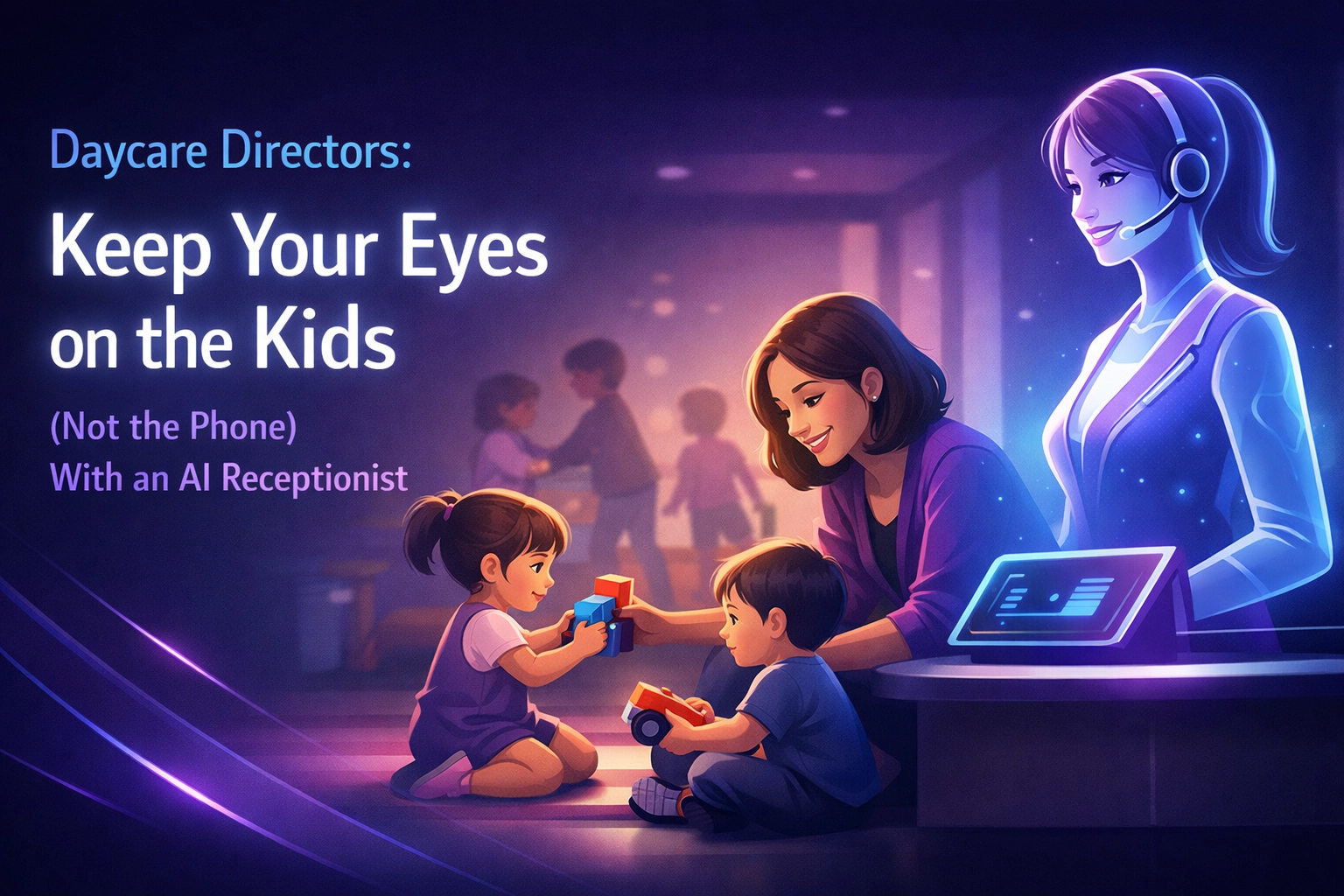
    Daycare teacher reading to children during story time while phone remains untouched on desk

    Most daycare centers don't have a marketing problem. They have an availability problem.

    When a parent calls to ask about enrollment, they're already interested. They found you. They picked up the phone. That's 90% of the work done.

    But if that call goes to voicemail during nap time or outdoor play, most parents won't leave a message. They'll call the next center on their list.

    Think about your last busy week. How many calls did you miss? Three? Five? Ten?

    If even two of those were serious enrollment inquiries, that's potentially $20,000–$40,000 in annual tuition walking away. Because you were doing your actual job, watching the kids.

    What an AI Receptionist Does for Daycare Centers

    An AI receptionist answers your phone 24/7. It's not a voicemail system. It's not a recording. It's a voice agent that actually talks to parents, answers their questions, and books tours.

    Here's what it handles without interrupting your day:

    Tour scheduling. Parents can book a tour while you're reading "The Very Hungry Caterpillar" for the third time. The AI checks your calendar, finds an open slot, books it, and sends a confirmation text. Done.

    Pricing questions. "How much is full-time care for a 3-year-old?" The AI knows your rates and can quote them instantly. No need to call back later.

    Hours and availability. "Do you have openings for infants?" The AI can check your waitlist status and give accurate answers. Or route the call to you if it needs a human decision.

    Basic policy questions. "What's your sick child policy?" or "Do you provide lunch?" The AI handles the frequently asked questions so you don't have to repeat the same answers 20 times a week.

    Screening spam calls. Solicitors, robocalls, and vendor pitches get filtered out. You only get notified when it's a real parent with a real inquiry.

    How It Works in Real Scenarios

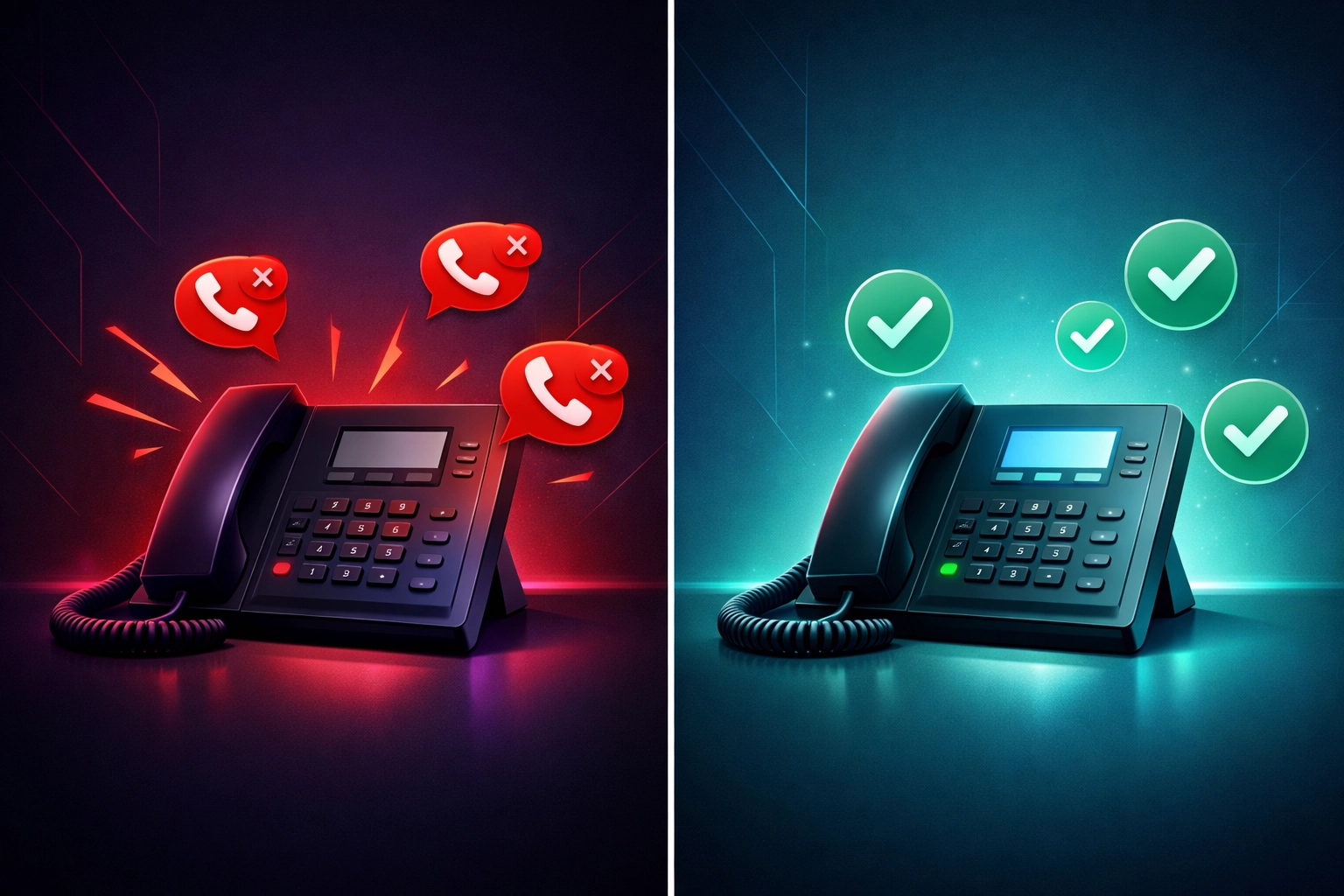
    Comparison of missed call notifications versus answered calls with AI receptionist

    Let's say a parent calls at 2:30 PM. You're outside with the 4-year-olds, and your phone is inside.

    The AI picks up on the first ring.

    Parent: "Hi, I'm looking for daycare for my 2-year-old daughter. Do you have any openings?"

    AI: "Thanks for calling. I can help with that. What's your daughter's name and date of birth?"

    The parent answers. The AI captures the details.

    AI: "Great. We do have openings in our toddler room. Would you like to schedule a tour? I have availability tomorrow at 10 AM or Thursday at 3 PM."

    The parent picks Thursday. The AI books it in your calendar and sends a confirmation text with your address and what to bring.

    You check your phone at 3:00 PM and see a notification: "New tour scheduled for Thursday at 3 PM. Contact info and notes are in your dashboard."

    You didn't miss the call. You didn't play phone tag. The parent got immediate service. And you stayed focused on the kids.

    The 24/7 Answering Service Advantage

    Parents don't stop thinking about childcare at 5 PM.

    They research after the kids go to bed. They call during their lunch break. They compare centers on Saturday morning.

    If your center only takes calls during business hours, you're invisible half the time. An AI voice agent answers around the clock, evenings, weekends, holidays.

    A parent calls at 8 PM on Sunday. The AI answers, provides information, and books a Monday morning tour. When you walk in Monday, you already have a qualified lead waiting.

    That's the kind of responsiveness that fills enrollment spots fast.

    Missed Call Text Back: The Safety Net

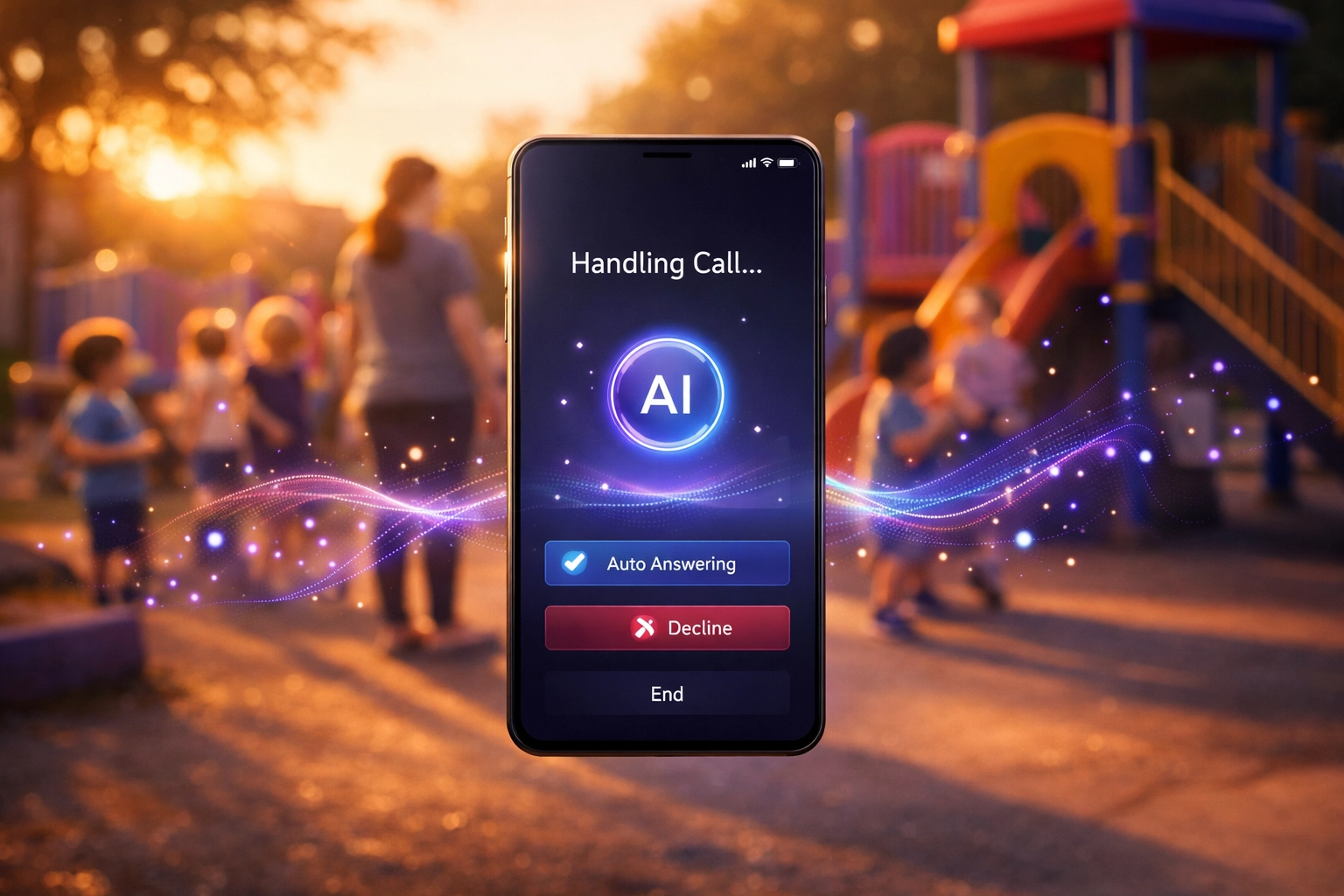
    AI receptionist answering phone call automatically while daycare children play outside

    Even with an AI receptionist, there might be moments when a call needs to go to a human, and you're genuinely unavailable.

    That's where missed call text back becomes critical.

    If the AI routes a call to you and you can't answer, the system automatically sends a text to the caller: "Sorry we missed you. We'll get back to you within the hour. Or reply here to let us know the best time to call."

    Most parents will text back. Now you're in an async conversation that doesn't require perfect timing. You can respond between activities instead of playing phone tag for three days.

    It's a simple feature that recovers leads you'd normally lose.

    What Parents Hear Makes a Difference

    Here's the reality: when parents call daycares, they're evaluating you from the first ring.

    If they get voicemail, they assume you're disorganized or too busy. If they get a frazzled staff member who's clearly distracted by crying kids in the background, they wonder if their child will get attention.

    An AI receptionist answers calmly, professionally, and instantly. Every time.

    Parents hear a center that has its act together. That projects confidence and competence. That makes them feel like their child will be in good hands.

    First impressions matter in childcare. You don't get a second chance.

    Getting Started Is Simple

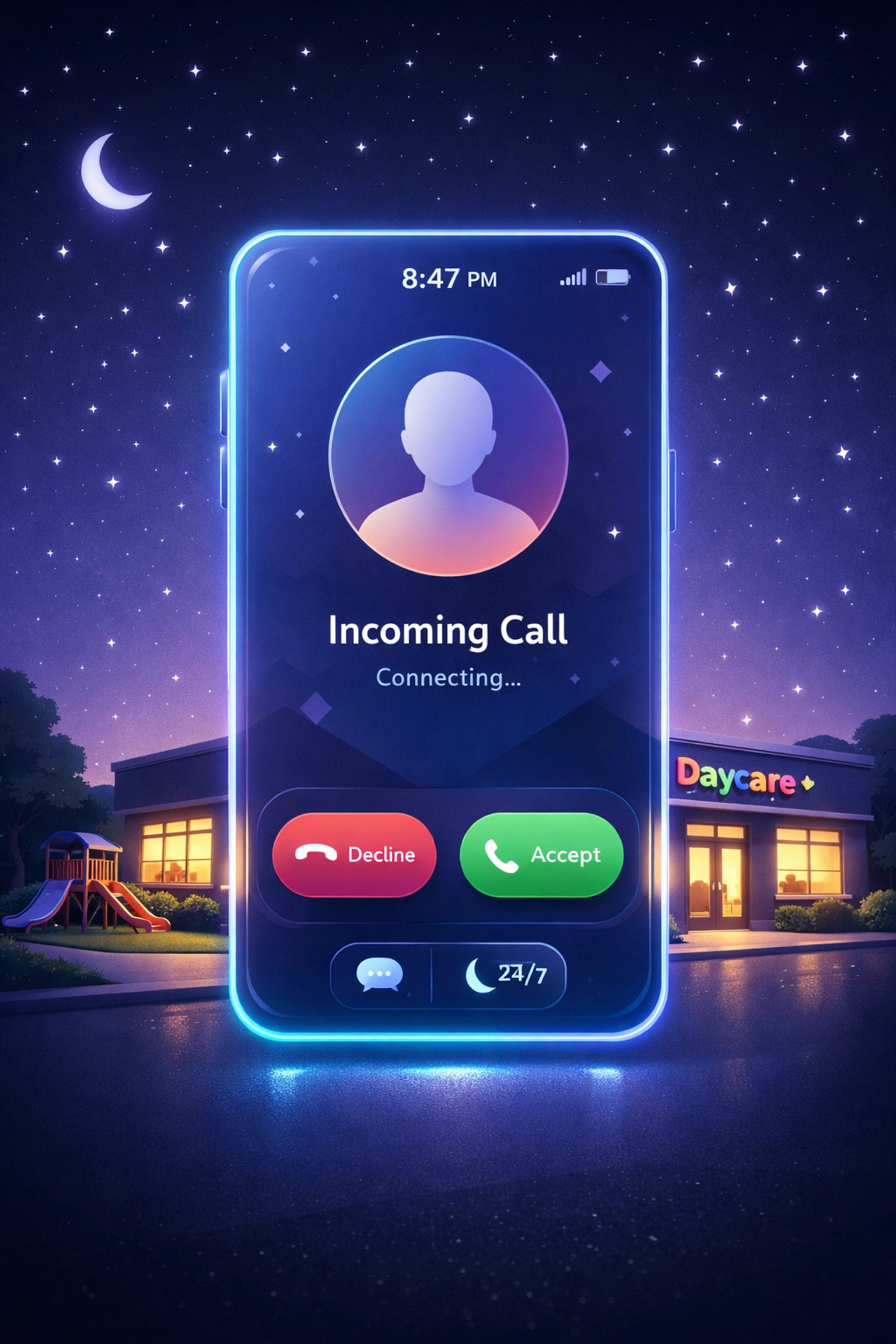
    Daycare center with 24/7 AI answering service handling parent calls after hours at night

    You don't need a tech degree to deploy an AI receptionist. Most systems work like this:

    You forward your main line to the AI service. The AI handles incoming calls using the information you provide: your rates, hours, policies, calendar availability.

    When a call needs a human, it routes to your cell phone. Otherwise, it handles everything and sends you a summary.

    Setup usually takes less than a day. You're not replacing your existing phone system. You're just adding a layer that picks up when you can't.

    No hardware to install. No complicated integrations. Just smart call handling that works in the background.

    Focus on What You Do Best

    You became a daycare director because you care about kids. Not because you wanted to be a full-time receptionist.

    An AI voice agent removes the constant interruption of the phone so you can do the work that actually matters. Tour bookings still happen. Parents get their questions answered. Enrollment inquiries don't slip through the cracks.

    The kids get your full attention. And your business grows.

    If you're tired of choosing between the phone and the children, it's time to stop choosing. Let the AI handle the calls. You handle the care.

    See how Sndflo's AI receptionist works for childcare centers at sndflo.com.

  • 24/7 Answering Service: Does Your Business Really Need One? Here’s the Truth

    24/7 Answering Service: Does Your Business Really Need One? Here’s the Truth

    Let's cut through the marketing fluff.

    You've seen the ads. Every answering service claims your business will collapse without 24/7 phone coverage. That every missed call equals lost revenue. That your competitors are already doing it.

    Some of that is true. Some of it isn't.

    Here's what you actually need to know.

    When You Really Need 24/7 Phone Coverage

    Not every business needs round-the-clock answering. But some absolutely do.

    You need a 24/7 answering service if:

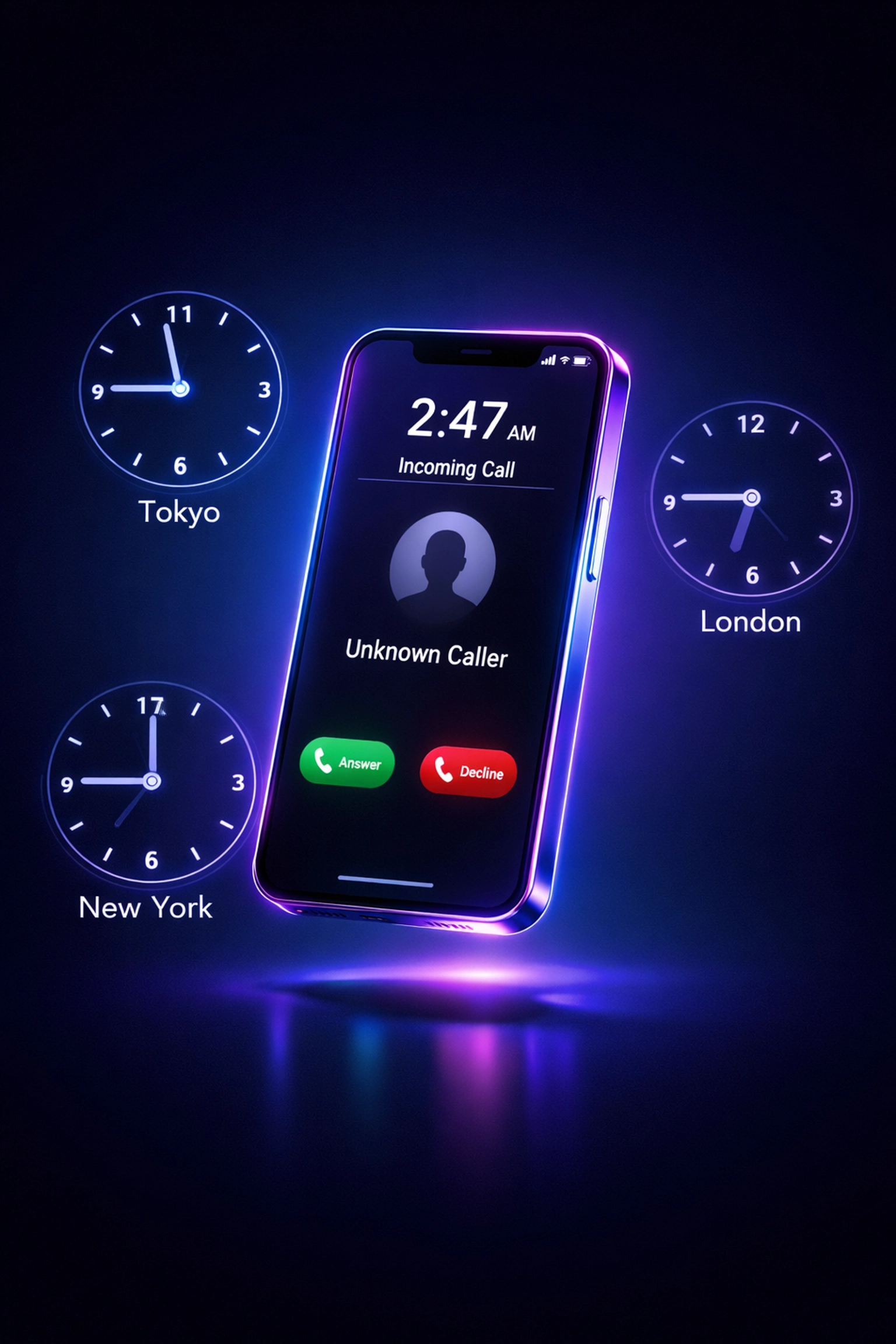
    Your customers operate in different time zones. If you serve clients across the country or internationally, your 5 PM is someone else's 8 AM. They're calling during their business hours , which happen to be your off-hours.

    You handle emergencies or urgent requests. HVAC companies get calls about broken furnaces at 2 AM. Plumbers deal with burst pipes on Sundays. Medical practices handle patient concerns after hours. If your service involves emergencies, you can't afford to miss those calls.

    You're competing for high-value leads. In real estate, legal services, or B2B sales, the first person to respond often wins the deal. When someone's ready to buy or hire, they're calling multiple providers. If you don't answer, your competitor will.

    Your customers expect it. Some industries have trained customers to expect 24/7 availability. If everyone in your space offers it and you don't, you look behind the times.

    Smartphone receiving after-hours calls across multiple time zones for 24/7 answering service

    The Real Cost of Missed After-Hours Calls

    Let's talk numbers.

    The average business loses around $1.6 million per year from missed calls. That's not a typo. Most of that happens outside regular business hours.

    Here's why after-hours calls matter more than you think:

    After-hours leads convert better. Data shows that leads who call outside business hours convert 10-15% higher when answered live. These aren't casual browsers , they're motivated buyers who've decided to act. Right now. Not tomorrow.

    Your voicemail isn't working. Most people don't leave voicemails anymore. They hang up and call the next business on their list. You don't even know you missed them.

    Callbacks don't convert the same. Even if someone leaves a message, returning their call the next morning means competing with everyone else they contacted overnight. You've lost the advantage.

    Think about your average customer value. Now think about how many calls you're missing each week after 5 PM, on weekends, during lunch. Do the math. It adds up fast.

    When 24/7 Coverage Is Overkill

    Now for the honest part , sometimes 24/7 answering is overkill.

    You probably don't need it if:

    You get two calls a week after hours. If your phone rarely rings outside business hours, you're solving a problem you don't have. Check your call logs first.

    Your business model doesn't support it. If you run a boutique that only takes walk-ins, or a service that requires same-day scheduling during business hours, after-hours calls won't convert anyway.

    You're a team of one. If you're a solo operator who can't deliver services outside your working hours, answering those calls just creates expectations you can't meet.

    Your margins are too thin. If you're running on razor-thin profit margins and barely making it work, adding an answering service might not make financial sense , yet.

    The key word is "yet." As you grow, what doesn't make sense today might become essential tomorrow.

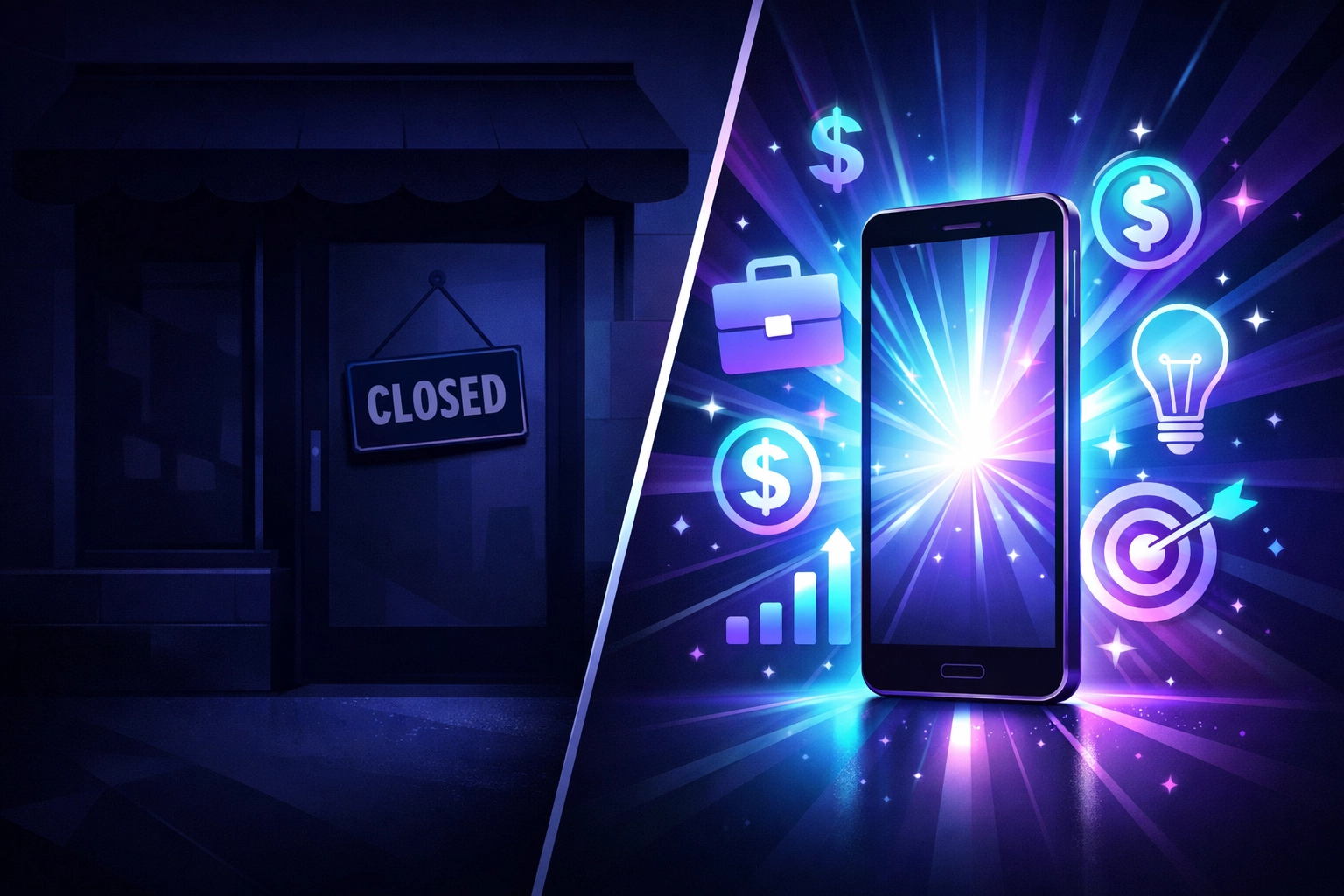
    Closed business missing calls versus capturing revenue with 24/7 phone answering

    The Traditional Answering Service Problem

    Let's say you've decided you need 24/7 coverage. The traditional answer is hiring a human answering service.

    Here's what that looks like:

    Expensive. Human answering services typically cost $1-3 per call, with monthly minimums ranging from $100-500. Scale that across dozens or hundreds of calls, and you're looking at serious money.

    Inconsistent. Different operators handle your calls differently. Some are great. Some are rushed. Your brand experience varies wildly depending on who picks up.

    Limited capabilities. Most answering services take messages. That's it. They can't book appointments, access your calendar, or handle complex routing. They're just expensive voicemail.

    Training headaches. Every time you update your services, pricing, or procedures, you need to retrain their team. That takes time and rarely sticks perfectly.

    Hidden costs. Many services charge extra for holidays, weekends, Spanish language support, or SMS capabilities. The "$99/month" plan becomes $300 real fast.

    Don't get me wrong , human answering services work. But they're designed for a pre-internet, pre-AI world. There's a better option now.

    The AI Receptionist Alternative

    An AI receptionist gives you 24/7 phone answering service without the traditional headaches.

    Here's how it's different:

    Actually affordable. AI phone answering service costs a flat monthly rate , usually $59-199 per month regardless of call volume. No per-call charges. No surprise bills.

    Perfectly consistent. Your AI receptionist answers every call the same way, every time. No bad days. No rushed calls. Your brand experience stays consistent at 2 PM or 2 AM.

    Does more than take messages. Modern AI receptionists can book appointments, answer common questions, route calls intelligently, and send automated follow-ups. They're actual virtual assistants, not glorified voicemail.

    Integrates with your tools. Connect it to your CRM, calendar, and SMS system. When someone calls, the AI can check your availability, book them in, and send confirmation texts. Automatically.

    Learns instantly. Update your AI's knowledge base in minutes. No retraining sessions. No hoping the information reaches every operator. Change it once, and it's live.

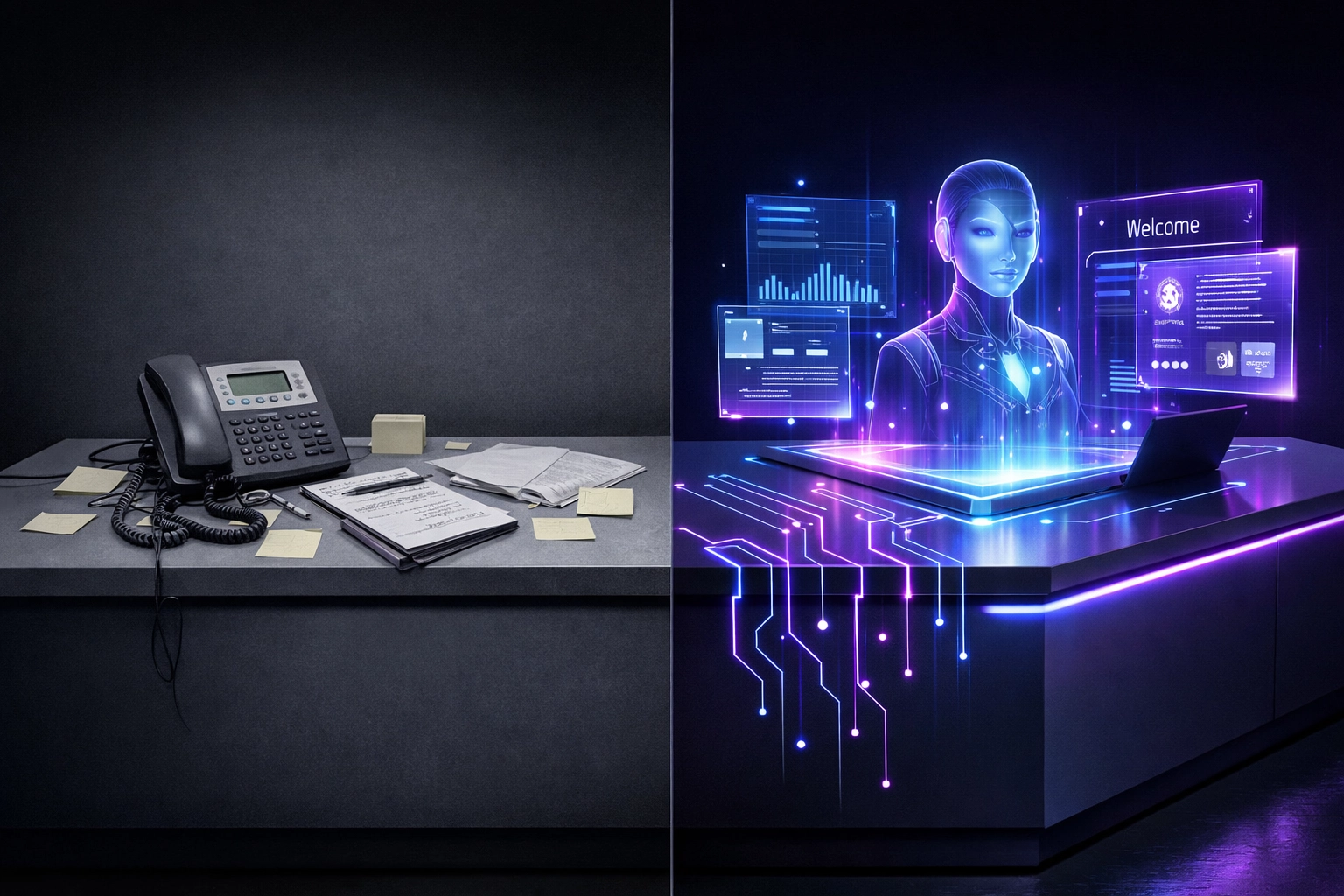
    Traditional answering service desk versus modern AI receptionist interface

    What About Missed Call Text Back?

    Here's a feature that matters more than most businesses realize.

    Missed call text back automatically sends a text message to anyone who calls and doesn't connect. It keeps the conversation going even when calls drop or go unanswered.

    Why it works:

    People prefer texting. A text response to their call feels personal and immediate. It shows you noticed they tried to reach you.

    It captures leads who won't leave voicemail. That's most people under 40.

    It gives them an easy way to continue the conversation. They can text back their question, request, or availability. You respond when you can.

    Combined with an AI receptionist, missed call text back creates a safety net. If the AI can't handle something or the call fails for technical reasons, the text catches them. You don't lose the lead.

    Human vs. AI: The Honest Comparison

    Let's be direct about the tradeoffs.

    Humans are better at:

    • Complex empathy and emotional situations
    • Handling truly unique scenarios outside any script
    • Building personal relationships over repeated interactions

    AI receptionists are better at:

    • Consistency across thousands of calls
    • Working 24/7 without breaks, holidays, or sick days
    • Instant access to information and calendars
    • Scaling without additional cost
    • Following processes perfectly every single time

    For most small and medium businesses, the AI advantages outweigh the human ones. Your receptionist isn't building deep relationships over the phone : they're routing calls, answering questions, and booking appointments. AI does that perfectly.

    Save the human touch for the actual service delivery.

    Automated text message response from missed call text back feature

    Does Your Business Really Need It?

    Back to the original question.

    You need a 24/7 answering service if missing calls is costing you money. That's the test.

    Check your call records. How many calls come in after hours? How many voicemails do you get? How many hang-ups?

    Calculate what those leads might be worth. If you typically close 20% of new leads at an average value of $500, and you're missing 10 calls per week, that's $5,200 in monthly revenue walking away.

    Compare that to the cost of an AI receptionist : usually under $200 per month. The math makes sense.

    If you're not missing calls, or if the calls you're missing wouldn't convert anyway, you don't need it yet. Save your money.

    But if you're leaving money on the table every time your phone rings after 5 PM, it's not about whether you need it. It's about how much longer you can afford not to have it.

    The Bottom Line

    Most businesses need some form of after-hours coverage. The question is what kind.

    Traditional human answering services work but cost too much and do too little. Letting calls go to voicemail loses you leads and revenue.

    An AI phone answering service gives you 24/7 coverage that's consistent, capable, and affordable. It books appointments, answers questions, and captures leads while you sleep.

    You don't need perfect. You need present. When someone calls your business at 9 PM on a Saturday, the only wrong answer is silence.

    The truth? If you're wondering whether you need 24/7 answering, you probably do. The businesses that don't need it aren't asking the question.

    Start capturing those after-hours calls. The revenue is waiting.

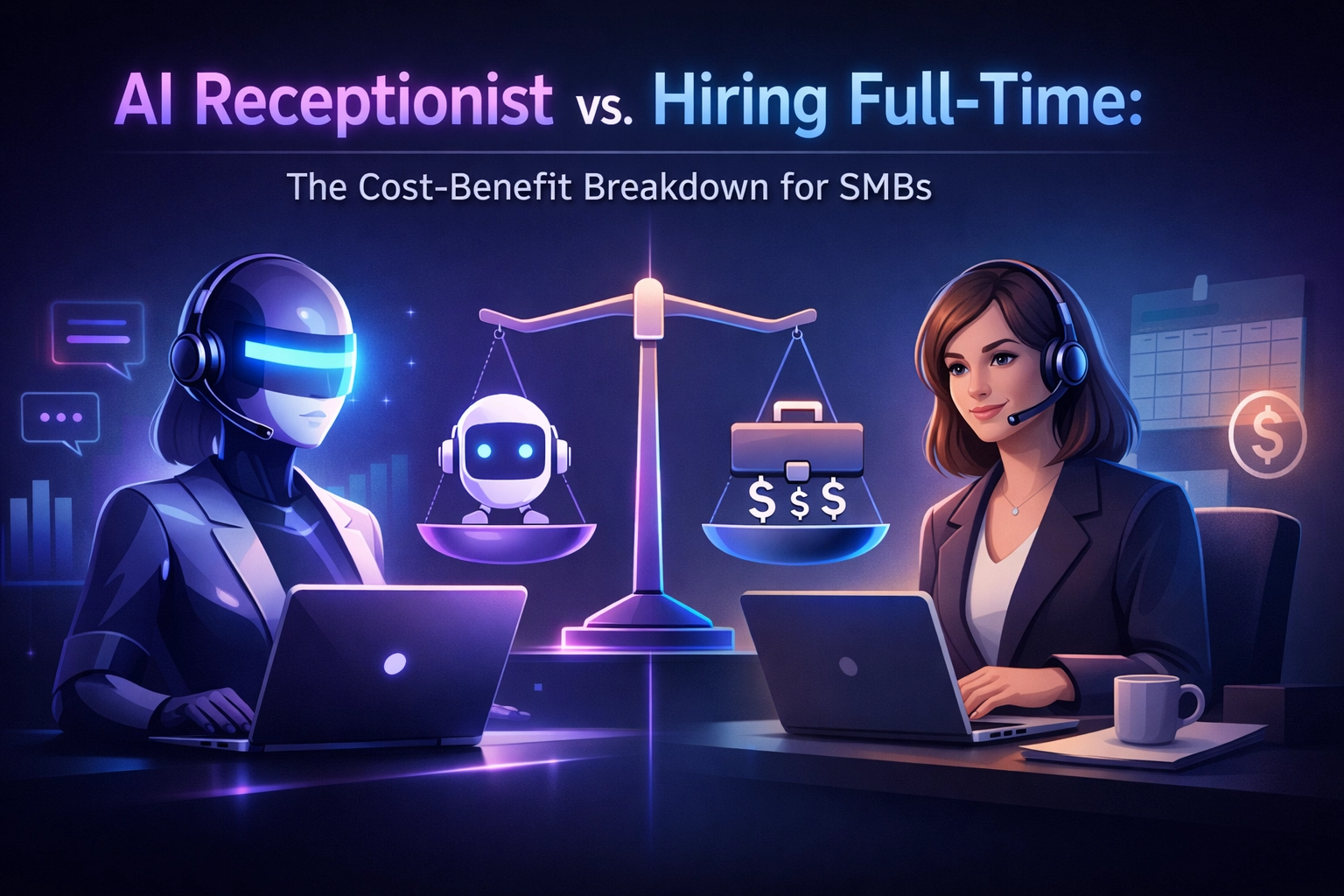
  • AI Receptionist vs. Hiring Full-Time: The Cost-Benefit Breakdown for SMBs

    AI Receptionist vs. Hiring Full-Time: The Cost-Benefit Breakdown for SMBs

    Every time your phone rings and nobody answers, you lose money. It sounds harsh, but it's the reality of running a small business. You work hard to get leads. You spend money on marketing. Then, a potential client calls, gets a voicemail, and hangs up to call your competitor.

    For most small to medium businesses (SMBs), the solution has always been a full-time receptionist. But that’s a heavy financial lift. Between salaries, benefits, and management, the "front desk" is often your biggest overhead.

    Now, there’s a shift happening. AI voice agents are no longer robotic or clunky. They sound human. They work 24/7. And they cost a fraction of a traditional hire. Let’s break down the math and see if an ai receptionist makes sense for your bottom line.

    The true price of a "Hello"

    When you hire a full-time receptionist, you aren't just paying for a person to sit at a desk. You're buying their time, but you’re also paying for everything else that comes with an employee.

    Current market data shows a full-time human receptionist costs between $45,000 and $60,000 per year. That’s just the base. Once you add in health insurance, payroll taxes, 401(k) matching, and workers' comp, that number jumps significantly.

    Then there’s the overhead. You need a desk. A computer. A phone system. Professional software licenses. You even pay for the coffee they drink and the space they occupy.

    In contrast, a high-quality ai phone answering service like Sndflo typically costs between $1,100 and $4,800 per year. Even at the premium end, you're looking at roughly 10% of a human’s salary.

    A scale weighing expensive human receptionist overhead against a low-cost, efficient AI phone answering service.

    Hidden costs you haven't considered

    The salary is the obvious part. The hidden costs are what really drain an SMB’s bank account. Think about the last time you hired someone.

    You spent weeks reviewing resumes. You sat through interviews. Once you found the right person, you spent two weeks training them on your CRM and your specific business tone.

    What happens when they leave? The average turnover rate for front-office staff is high. Every time a receptionist quits, you repeat that expensive cycle. You lose productivity. You lose money.

    Sndflo doesn't have a turnover rate. Once you set your preferences at sndflo.com, the AI stays trained forever. It doesn't need a "refresher course" on your pricing. It doesn't get burnt out. It just works.

    24/7 availability is no longer optional

    Your customers don't just shop between 9 AM and 5 PM anymore. They browse at midnight. they research on Sunday mornings. If they have a question or want to book an appointment, they want to do it now.

    A human receptionist works 40 hours a week. There are 168 hours in a week. That means for 128 hours: 76% of the time: your business is effectively closed to phone inquiries.

    A 24/7 answering service powered by AI changes the game. It handles the midnight inquiries while you sleep. It takes the Sunday morning booking while you’re at brunch.

    Research shows that roughly 25% of calls go unanswered in businesses that rely solely on human staff. For a medical clinic or a law firm, that’s not just a missed call: it’s a massive loss in potential revenue.

    Handling the "Flash Crowd"

    What happens when three people call at the exact same time? A human receptionist can handle one. The other two go to voicemail. Statistics tell us that 80% of people who hit a voicemail will hang up without leaving a message.

    They just move to the next Google result.

    An ai voice agent doesn't have a limit. It can handle 10, 50, or 100 calls simultaneously. No one ever hears a busy signal. No one is put on hold for ten minutes. Every single lead is engaged immediately.

    A central digital hub illustrating how an AI voice agent handles multiple simultaneous calls for a small business.

    Industry Spotlight: Where the savings hit hardest

    Different industries face different challenges. Let's look at how the AI vs. Human debate plays out in specific sectors.

    Medical and Wellness Clinics

    Patient no-shows are a silent killer for clinics. A full-time receptionist spends hours playing phone tag to confirm appointments. Sndflo’s AI can automate these reminders and handle inbound rescheduling instantly. Businesses using AI for scheduling see up to a 60% reduction in no-shows.

    Real Estate

    Leads in real estate are "hot" for about five minutes. If an agent is at a showing and misses a call from a prospective buyer, that buyer is already calling another listing. An AI receptionist can pre-qualify the lead, ask about their budget, and book a viewing on the agent’s calendar immediately.

    Retail and Local Services

    Think about a dog grooming business or a HVAC company. During peak season, the phones don't stop. A human receptionist gets overwhelmed, leading to mistakes or missed details. The AI handles the volume spikes without breaking a sweat, ensuring every appointment is booked correctly.

    Icons for medical, real estate, and retail businesses connected by a 24/7 AI phone answering service network.

    Natural conversations, not robotic scripts

    The biggest fear most business owners have is that an AI will sound like a "robot." We’ve all been trapped in those "Press 1 for Sales" loops. They’re frustrating.

    Sndflo is different. We focus on natural language processing. This means the AI understands context. It handles interruptions. It speaks with a human-like cadence.

    The goal isn't to "trick" your customers: it's to provide them with the best service possible. Most customers prefer a helpful AI that answers immediately over a human who makes them wait on hold for five minutes.

    The Scalability Factor

    If your business grows by 50% next month, what do you do? With a human-only model, you have to hire a second person. That’s another $50,000. It’s a massive jump in risk.

    With Sndflo, you just scale your plan. There’s no new office space to rent. No new laptops to buy. You get instant scalability that follows your business growth. You pay for what you need, when you need it.

    A rising glowing structure representing instant business scalability and growth with an AI receptionist.

    The 5-Year Outlook: $250,000 in Savings

    Let's look at the long-term math. Over five years, a human receptionist will cost you at least $250,000 to $300,000.

    An AI receptionist over that same period? You’ll likely spend less than $20,000.

    That’s a quarter of a million dollars you can reinvest into your business. You could use that for marketing. You could use it to upgrade your equipment. Or, you could just keep it as profit.

    When you look at the numbers, it’s not just about saving money: it’s about making your business more resilient.

    Is it time to make the switch?

    We aren't saying human employees aren't valuable. Humans are great for complex, high-empathy situations that require nuanced judgment.

    But for answering basic questions, booking appointments, and capturing leads? AI is faster, cheaper, and more reliable.

    Most successful SMBs are moving toward a hybrid model. They let the AI handle the front-line calls 24/7, and they save their human staff for the high-level work that actually requires a human touch.

    If you’re ready to stop missing calls and start saving thousands every month, it’s time to look at what an AI receptionist can do for you.

    Check out our home page to see how easy it is to deploy your first agent. No long-term contracts. No complex setups. Just a front desk that never sleeps.

    Ready to see the math for your own business?
    Visit Sndflo and let’s get your calls covered.

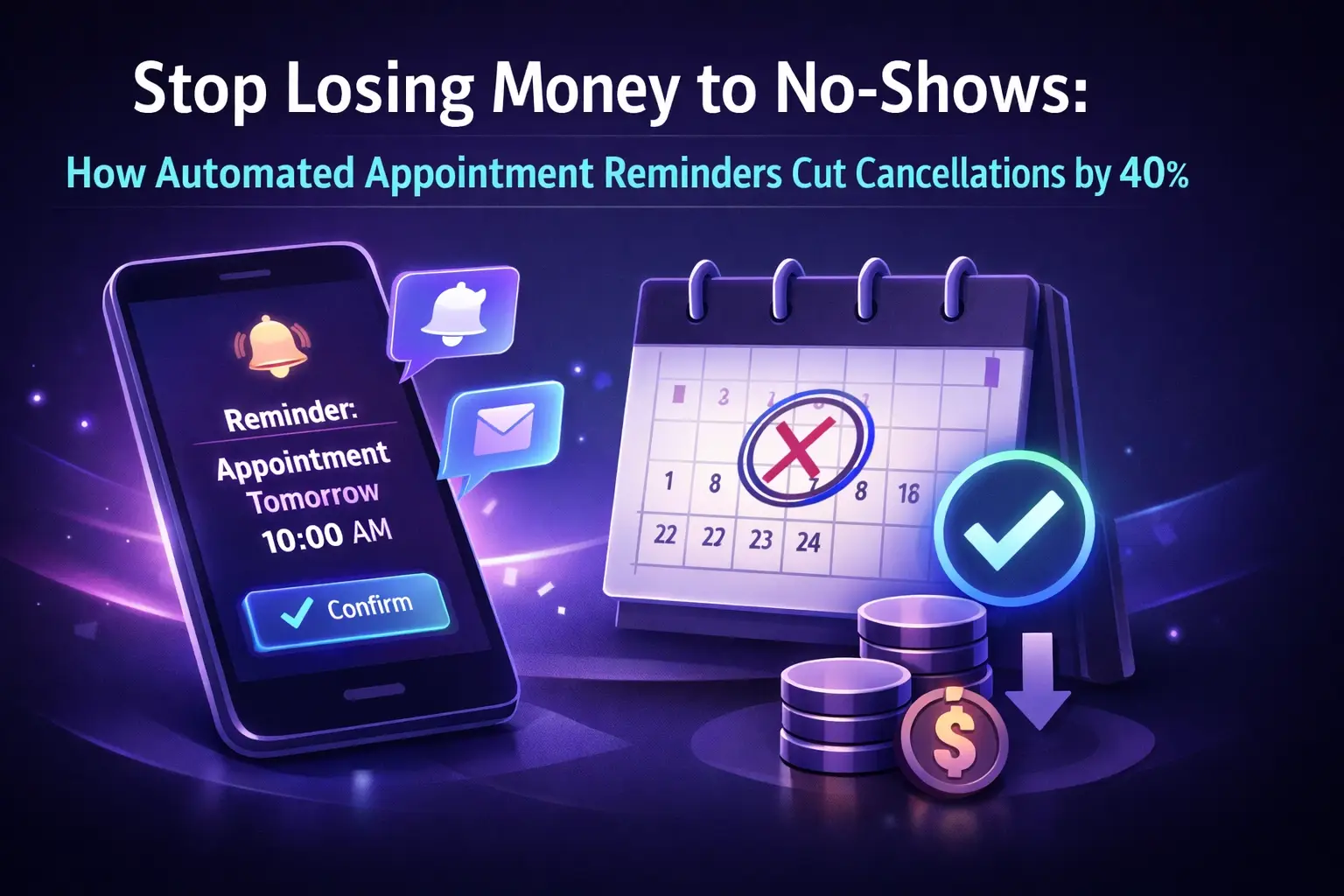
  • Stop Losing Money to No-Shows: How Automated Appointment Reminders Cut Cancellations by 40%

    Stop Losing Money to No-Shows: How Automated Appointment Reminders Cut Cancellations by 40%

    Every empty appointment slot is money walking out your door.

    A patient who doesn't show. A client who forgets. A customer who got busy. You've blocked that time. You've turned away other appointments. And now you're sitting there with nothing to show for it.

    The average no-show rate across service businesses hovers around 20-30%. For a medical practice seeing 100 patients per week, that's 20-30 missed appointments. At $150 per visit, you're losing $3,000 to $4,500 every single week.

    That's $234,000 per year. Gone.

    But here's what most business owners don't realize, you can cut that number by 40% or more with a system that costs less than your monthly coffee budget.

    The Real Cost of No-Shows Goes Beyond Lost Revenue

    You already know no-shows hurt your bottom line. But the damage runs deeper than the obvious lost appointment fee.

    Your staff spends hours calling patients to confirm appointments. They're playing phone tag, leaving voicemails, and manually updating your calendar. That's time they could spend on revenue-generating activities or actual patient care.

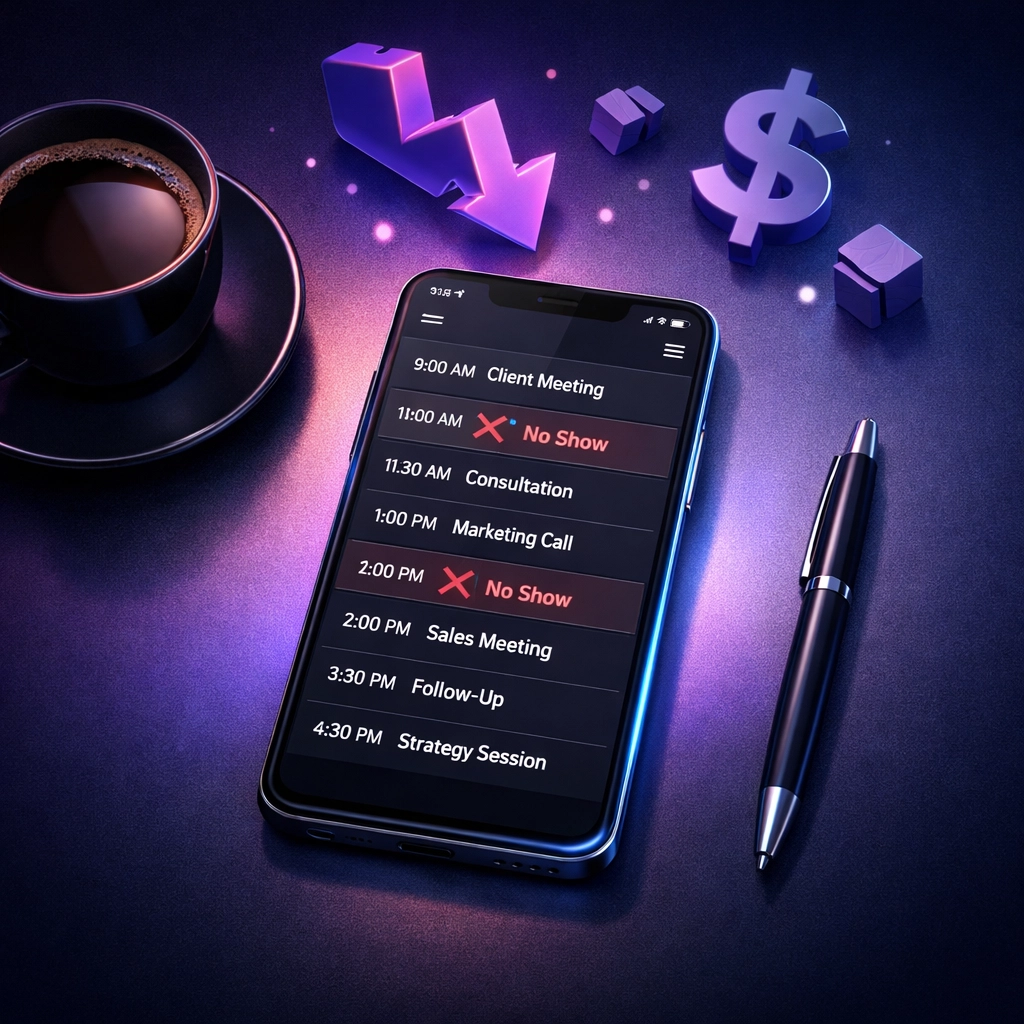
    Business calendar showing missed appointments and no-shows costing revenue

    Then there's the opportunity cost. When someone no-shows, you can't fill that slot with another patient who actually needs you. You've turned away revenue twice, once when you blocked the time, and again when you couldn't backfill it.

    Your schedule becomes unreliable. You can't accurately predict your day. Some days you're slammed, others you're scrambling to look busy. That unpredictability makes everything harder, staffing, inventory, cash flow planning.

    And if you're in healthcare, there's another cost you can't ignore. Patients who miss appointments don't get the care they need. Conditions worsen. Follow-ups get missed. Health outcomes suffer.

    Why Your Current Reminder System Isn't Working

    Most small businesses handle appointment reminders one of three ways. None of them work well.

    Manual phone calls eat up staff time and rarely reach people. You leave voicemails that get ignored. You play phone tag for days. And half your patients don't even answer calls from numbers they don't recognize.

    Email reminders get buried in spam folders or ignored in crowded inboxes. The average office worker receives 121 emails per day. Your appointment reminder is competing with work emails, newsletters, and promotional messages. It doesn't stand a chance.

    Nothing at all because you're too busy running your business. Patients are supposed to remember their appointments. Except they don't. Because life happens.

    The problem isn't your patients. It's your system.

    How Automated SMS Reminders Actually Work

    Text messages get opened. That's the difference.

    SMS messages have a 98% open rate compared to 20% for emails. And 90% of texts get read within three minutes of delivery. When you send someone a text reminder, they see it. When they see it, they respond to it.

    Comparison of manual phone reminders versus automated SMS appointment reminder system

    Here's how an automated system like Sndflo handles your appointment reminders:

    Your calendar syncs automatically. When you book an appointment, whether through your practice management system, Google Calendar, or any scheduling platform, the reminder system picks it up instantly. No manual entry required.

    The system sends reminders at optimal times. Research shows that text messages sent at 6 PM achieve 41.4% higher confirmation rates than those sent at noon. Your reminders go out exactly when patients are most likely to respond, typically 48 hours before the appointment, then again 24 hours before.

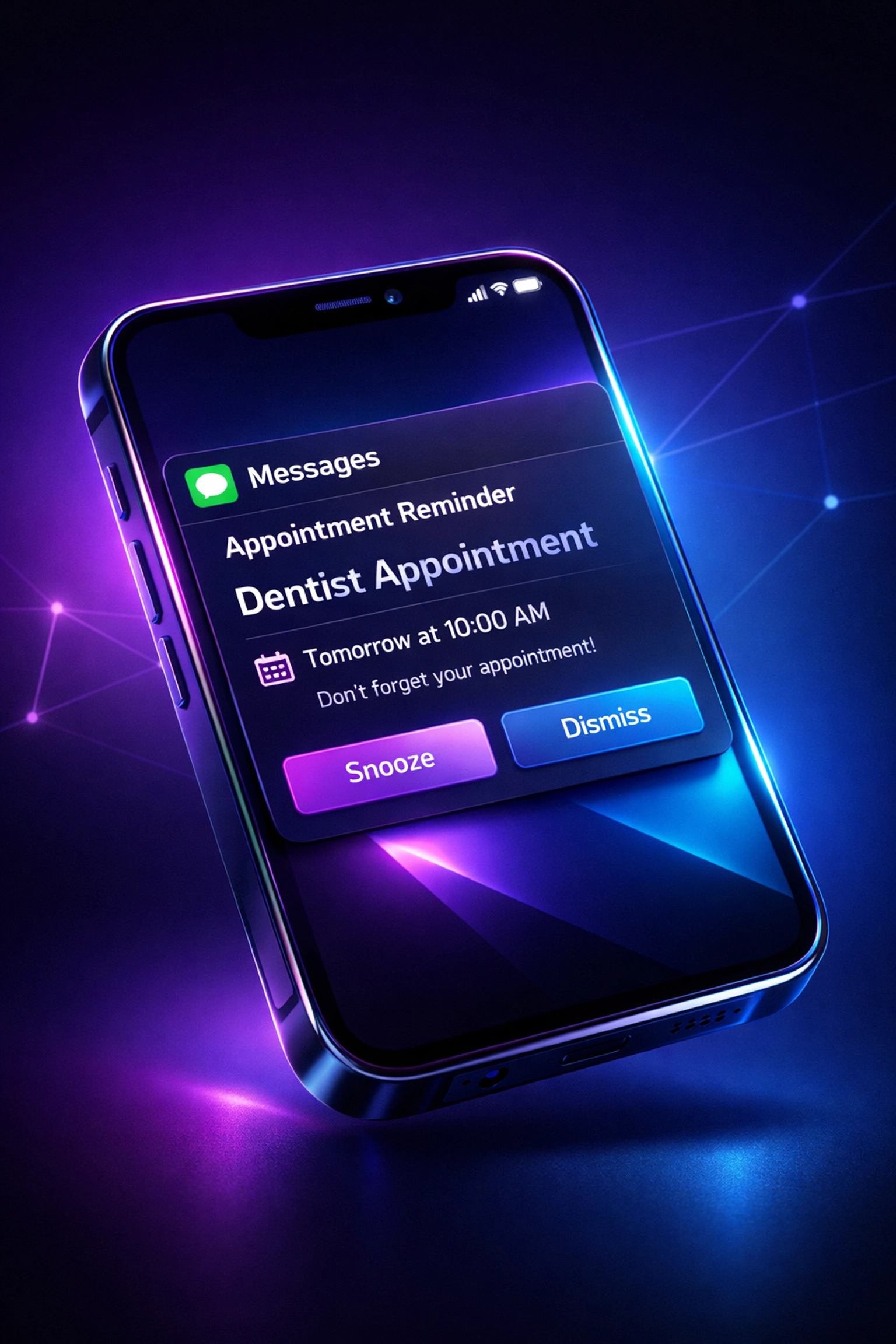
    Patients can respond directly. They text back to confirm, reschedule, or cancel. The system updates your calendar automatically. No phone tag. No missed messages. No confusion.

    If they reschedule or cancel, your staff gets notified immediately. That gives you time to fill the slot with another patient from your waiting list.

    The Data Doesn't Lie: 40% Fewer No-Shows

    Mayo Clinic's Jacksonville facility cut no-shows by nearly 50% with automated text reminders. Dignity Health saw a 25% decrease after implementing automated scheduling. Optum reduced missed appointments by 30%.

    Health PEI's obstetrics clinic achieved a 69% reduction in no-shows through consistent automated reminders.

    A systematic review of 29 studies found that 97% demonstrated improved attendance rates with patient reminders. Patients who received automated reminders showed a 34% average reduction in missed appointments.

    Automated SMS appointment reminder on smartphone reducing cancellations by 40%

    Here's what that means for your business:

    If you're currently losing $234,000 per year to no-shows, a 40% reduction saves you $93,600 annually. That's enough to hire another staff member, upgrade your equipment, or finally take that vacation you've been putting off.

    For a salon booking 200 appointments per week at $75 each, dropping your no-show rate from 25% to 15% recovers $39,000 per year.

    For a home services business with an average job value of $300, reducing no-shows by 40% on just 20 weekly appointments adds $124,800 to your annual revenue.

    Industry-Specific Benefits You Can't Ignore

    Medical and dental practices see the highest impact. One healthcare system recovered $31,457 in lost revenue for every 1,600 appointments by implementing automated reminders. They also saved 500+ hours of staff time annually, time that staff redirected toward patient care instead of phone calls.

    Automated reminders also improve patient health outcomes. When patients actually show up for appointments, they get the preventive care, follow-ups, and treatments they need. Chronic conditions stay managed. Preventable complications get prevented.

    Salons and spas deal with especially high no-show rates because appointments feel less urgent than medical visits. Automated reminders cut through that perception. When your client gets a text the day before asking them to confirm, that appointment becomes real again. They either show up or give you enough notice to fill the slot.

    Home services businesses face unique challenges. Your technicians drive to job sites. If someone no-shows, you've wasted drive time, fuel, and the opportunity to serve another customer. Automated reminders reduce those wasted trips dramatically. They also let customers reschedule before you've already loaded up the truck.

    How Sndflo Handles This for You

    Sndflo's automated reminder system integrates directly with your existing calendar. Google Calendar, Outlook, your practice management software, it connects to whatever you're already using. No switching systems. No manual exports.

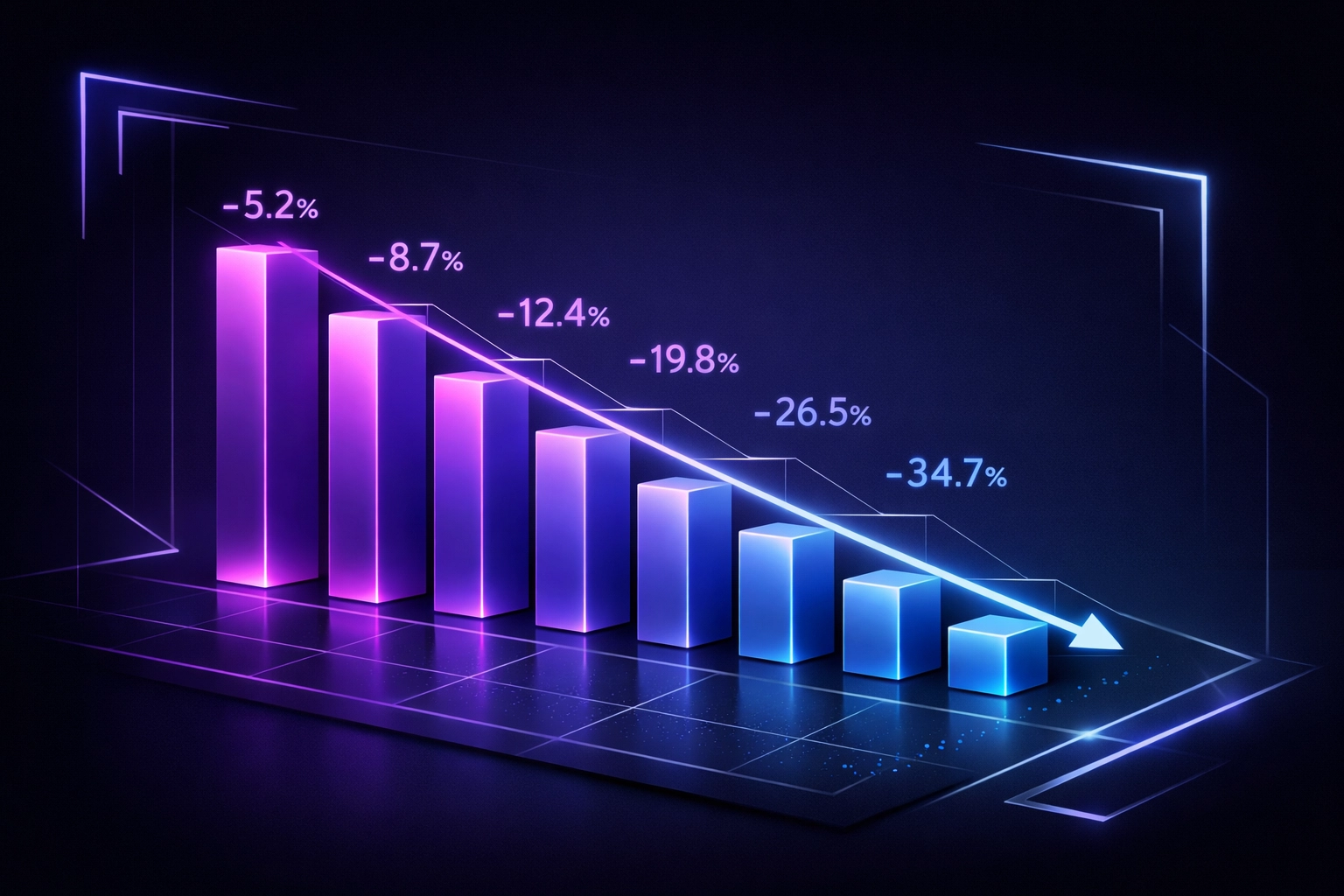
    Graph showing 40% reduction in appointment cancellations with automated reminders

    You set your reminder preferences once. How many days before the appointment. What time of day. What the message should say. Then the system runs automatically.

    When someone books an appointment, they're in the system. When the reminder time hits, they get a text. When they respond, your calendar updates. You don't touch any of it.

    The system handles multiple appointment types differently. A routine checkup gets different reminder timing than an urgent consultation. A haircut gets different messaging than a root canal. You configure it once based on your business rules, then it runs on autopilot.

    If someone tries to reschedule via text, Sndflo can handle that conversation directly. The AI understands natural language. If they say "can I move this to next Tuesday at 2?" the system checks your availability and either books it or offers alternatives. No human intervention required unless the AI encounters something complex.

    The cost? Around $0.14 per contacted patient. Compare that to $0.90 for manual telephone reminders. Plus the staff hours you're not spending on the phone.

    Getting Started Takes Less Time Than Your Morning Coffee

    You don't need to overhaul your entire practice management system. You don't need IT support. You definitely don't need to hire someone to manage this.

    Connect your calendar. Choose your reminder settings. Write your message template. Done.

    Most businesses see results within the first week. Patients start confirming appointments. No-shows drop. Your schedule becomes predictable again.

    Organizations that implement automated appointment reminders report higher revenue, better patient compliance, improved appointment utilization, and fewer unfilled appointments. 88% of healthcare leaders say the benefits extend beyond just reducing no-shows.

    Your empty appointment slots represent the easiest money you'll ever recover. You're not trying to find new customers. You're not launching a marketing campaign. You're just making sure the patients who already trust you actually show up.

    Medical, salon, and home service businesses using automated appointment reminders

    The math is simple. If automated reminders cost you $200 per month and save you even $2,000 in recovered no-shows, that's a 10X return. Most businesses see returns far higher than that.

    You can keep calling patients manually. You can keep losing $234,000 per year to no-shows. Or you can let a system handle it for you while you focus on actually running your business.

    The choice is obvious. The question is whether you'll make it today or six months from now after you've lost another $117,000 to preventable no-shows.

    Ready to stop losing money to missed appointments? Visit sndflo.com to see how automated reminders integrate with your existing workflow: no complicated setup required.

Blog Posts