
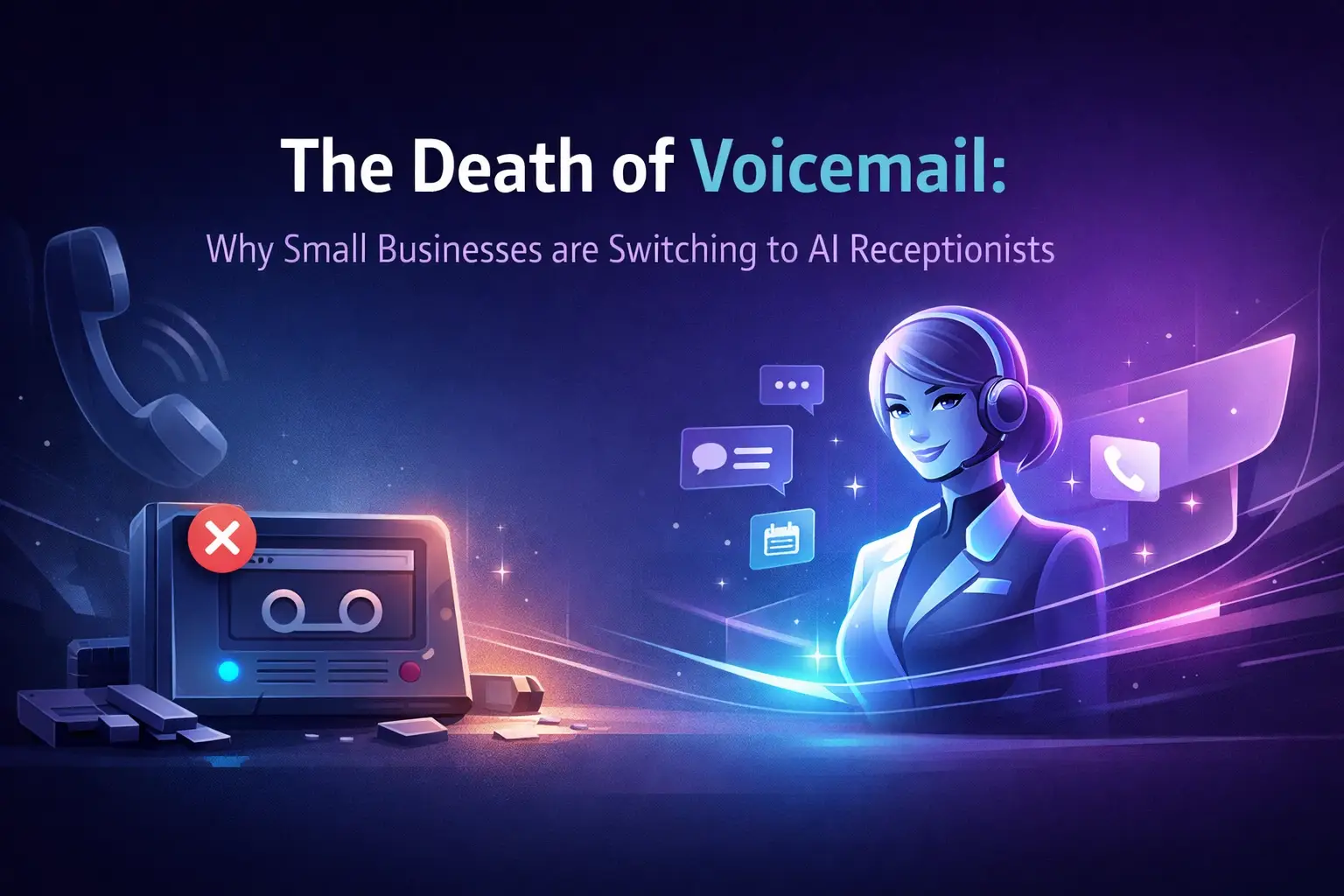
Voicemail isn't just outdated. It's actively costing you money.
Every time a customer hits your voicemail, you're asking them to do unpaid work: leave a message, wait for a callback, and hope you get back to them before they call your competitor. Most don't wait. They move on.
The numbers tell the story. Around 25% of business calls go unanswered. Of those missed calls, 85% of callers never try again. That's not a small leak. That's a revenue hemorrhage.
Small businesses are ditching voicemail entirely. They're switching to AI receptionists: systems that answer every call, qualify every lead, and turn phone conversations into booked appointments. No hold music. No message backlog. No "I'll call you back."
What Voicemail Actually Does (And Doesn't Do)
Voicemail is passive. It records audio and dumps it in your inbox.
That's it.
You get a notification. You listen to a rambling two-minute message. You try to write down the callback number while someone's talking in the background. You transcribe the details manually. You figure out who should handle it. Then: if you're fast: you call them back within a few hours.
By then, they've already booked with someone else.
Voicemail creates work for you. It doesn't solve problems for your customers. It delays resolution. And in a world where people expect instant answers, delay equals lost business.
What an AI Receptionist Actually Does
An AI voice agent picks up the phone and has a conversation.
Not a recording. Not a menu tree. A real back-and-forth exchange where the AI understands what the caller needs, asks follow-up questions, and takes action.
Here's what that looks like in practice:
- Caller: "Do you have any openings this week?"
- AI Receptionist: "I do. Are mornings or afternoons better for you?"
- Caller: "Afternoons work."
- AI Receptionist: "I have Thursday at 2 PM or Friday at 3 PM. Which one?"
- Caller: "Thursday works."
- AI Receptionist: "Perfect. Can I get your name and phone number to confirm that?"
Done. Appointment booked. Lead captured. No voicemail. No callback required.
The AI extracts structured information: name, phone number, preferred time, reason for calling: and delivers it to you in a clean summary. You don't listen to recordings. You don't transcribe anything. You just see a booked slot on your calendar and a text confirmation sent to the customer.
That's the difference between passive and active call handling.
The Revenue Impact Is Real
Let's talk numbers.
Companies using an AI receptionist around the clock saw a 35% increase in captured leads. That's not a marginal improvement. That's the difference between turning away one out of three customers and capturing every single one.
AI-led customer service improvements boost satisfaction scores by 19.6%. When customers don't have to leave voicemails and wait for callbacks, they're happier. Happier customers convert at higher rates and refer more business.
And here's the part that matters most: businesses using AI receptionists report revenue increases of up to 19.6%. That's because you're not losing leads to friction anymore. You're converting calls while your competitors are still checking voicemail.
The Operational Benefits You Can't Ignore
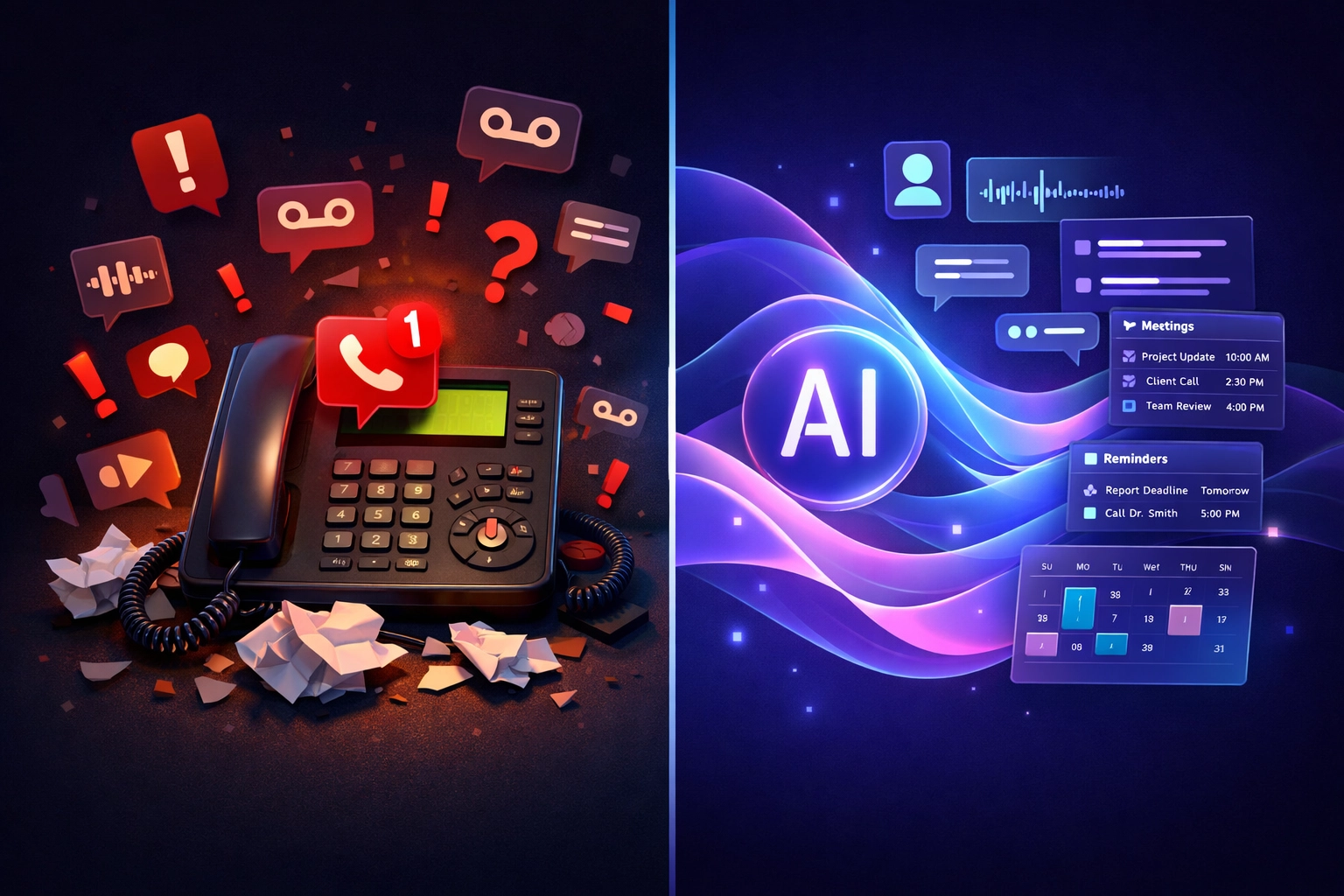
Voicemail creates administrative overhead. Someone has to listen to messages, write them down, route them to the right person, and follow up. That's time your team isn't spending on actual revenue-generating work.
An AI voice agent eliminates that entire workflow.
Every call gets answered. Every message gets logged. Every lead gets routed to the right place: automatically. The AI integrates with your calendar, your CRM, and your SMS system. When a call comes in, it checks availability, books the appointment, sends a confirmation text, and logs the lead in your system.
No manual data entry. No message backlog. No administrative bottleneck.
And it works 24/7. After-hours calls don't go to voicemail. They get answered by the AI. Weekend inquiries don't sit in your inbox until Monday. They turn into booked appointments before your competitors even open their doors.
That's how you capture leads your competition is missing.
The Cost Comparison Isn't Even Close
Hiring a full-time receptionist costs you $30,000 to $40,000 per year. That gets you 40 hours a week, plus vacation days, sick leave, and benefits.
An AI receptionist costs about 80% less. You get 24/7 coverage, unlimited call handling, and zero overhead. No training. No turnover. No payroll taxes.
Gartner estimates that small businesses using AI receptionists cut operating costs by up to 30%. Other research shows AI-driven call handling reduces costs by 50% compared to traditional staffing models.
You're not just saving money. You're reallocating budget from administrative tasks to growth activities. Instead of paying someone to answer phones, you're investing in a system that captures leads, books appointments, and scales with your business.
Why Traditional 24/7 Answering Service Models Don't Cut It Anymore
Some businesses use traditional answering services: live operators who take messages and forward them to you. That's better than voicemail, but not by much.
You're still playing phone tag. The operator takes a message. You get a notification. You call the customer back. They don't answer. You leave a voicemail. They call back. You're on another call. Repeat.
It's slow. It's inefficient. And it doesn't scale.
An AI voice agent doesn't take messages. It takes action. It books the appointment right then. It qualifies the lead before you ever pick up the phone. It routes urgent calls directly to you and handles routine inquiries on its own.
That's the difference between a messaging service and a revenue-generating system.
What Happens When You Don't Switch
Let's be clear about what you're risking.
Every missed call is a customer who raised their hand and said, "I want to do business with you." When they hit voicemail, you're telling them to wait. Most won't.
Your competitors are answering those calls. They're booking those appointments. They're capturing those leads while you're still sorting through messages.
The businesses that adapt early win. The ones that cling to voicemail because "it's always worked" get left behind. This isn't about being trendy. It's about not losing to someone who answers the phone.

What Switching Looks Like
You don't rip out your phone system. You don't retrain your staff. You just forward your main line to the AI.
Setup takes 2-3 days. The AI learns your business: your services, your pricing, your availability. You give it access to your calendar. You tell it how to handle different types of calls.
Then you turn it on.
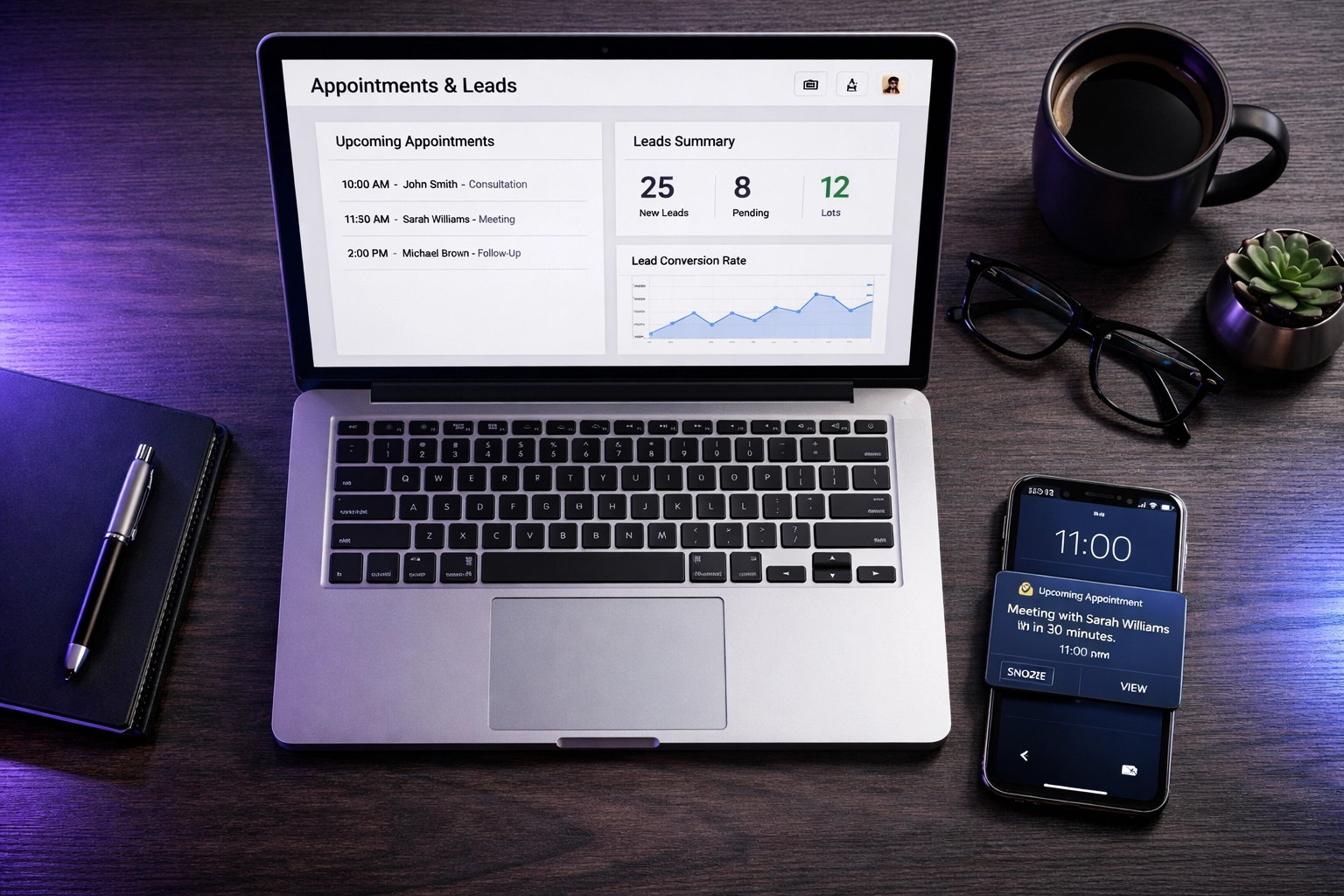
Calls start coming in. The AI answers. Appointments get booked. Leads get captured. You see everything in your dashboard: transcripts, summaries, booked slots.
If the AI doesn't know how to handle something, it routes the call to you. If you can't pick up, it sends a missed call text back instantly so the lead doesn't disappear.
You're not replacing your team. You're eliminating the bottleneck that keeps them from doing their actual jobs.
The Bottom Line
Voicemail is a dead end. It's where leads go to die.
An AI receptionist turns every call into an opportunity. It answers 24/7. It books appointments. It qualifies leads. It integrates with your systems. And it costs a fraction of what you're losing to missed calls.
The businesses switching now aren't doing it because it's innovative. They're doing it because it works. They're capturing more leads, closing more deals, and spending less time on administrative tasks.
If your phone system still relies on voicemail, you're competing with one hand tied behind your back. The fix isn't complicated. It's just a decision.
You can keep asking customers to leave messages and hope they call back. Or you can answer every time.
Want to see what this looks like for your business? Let's talk.
Leave a Reply