
You built a beautiful website.
The copy is sharp. The images are high-res. You’ve integrated the latest AI receptionists to handle your calls.
But there is a problem.
Your visitors are leaving before they even see your homepage.
In the digital world, speed isn't just a luxury. It is your foundation. If your site takes more than three seconds to load, 53% of your mobile users will bounce. They don't wait. They just click "back" and find your competitor.
At Sndflo, we see this happen too often. Small businesses invest in marketing but ignore the engine under the hood.
If your hosting is slow, your SEO will suffer. It is that simple.
The Brutal Truth About Speed and Rankings
Google has one goal. They want to provide the best possible experience for their users.
If Google sends someone to a slow website, that user gets frustrated. That reflects poorly on Google. To prevent this, their algorithm prioritizes fast-loading sites.
Research shows that top-ranking positions consistently have faster server response times. We are talking about milliseconds here.

A study of over 7,000 businesses found that the winners: the ones on page one: had servers that responded nearly twice as fast as those on page four or five.
Speed is a direct ranking factor. It isn’t a suggestion. It is a requirement.
When your site is fast, your bounce rate drops. When your bounce rate drops, Google sees that users like your site. They stay longer. They engage more.
These are engagement signals. They tell search engines you are a high-quality destination.
Understanding Google’s Report Card: Core Web Vitals
You might have heard the term "Core Web Vitals."
It sounds technical. It sounds like something only developers should care about.
It’s not. It is your website’s report card.
Google uses three specific metrics to measure how users experience your site speed:
- LCP (Largest Contentful Paint): How long it takes for the main content to load. Aim for under 2.5 seconds.
- INP (Interaction to Next Paint): How fast your site reacts when someone clicks a button or a link. Aim for under 200 milliseconds.
- CLS (Cumulative Layout Shift): Does your content jump around while loading? It shouldn't.
High-performance hosting handles the heavy lifting for these metrics.
If your server is slow, your LCP will be high. No amount of image optimization can fix a sluggish server. You need infrastructure that responds in under 200 milliseconds.
Most budget hosts can't do that. They cram thousands of websites onto one server. It’s crowded. It’s slow. And it’s hurting your bottom line.
The Engine Under the Hood: SSDs and NVMe
Storage matters.
Old-school hosting uses traditional hard drives. They have moving parts. They are slow to retrieve data.
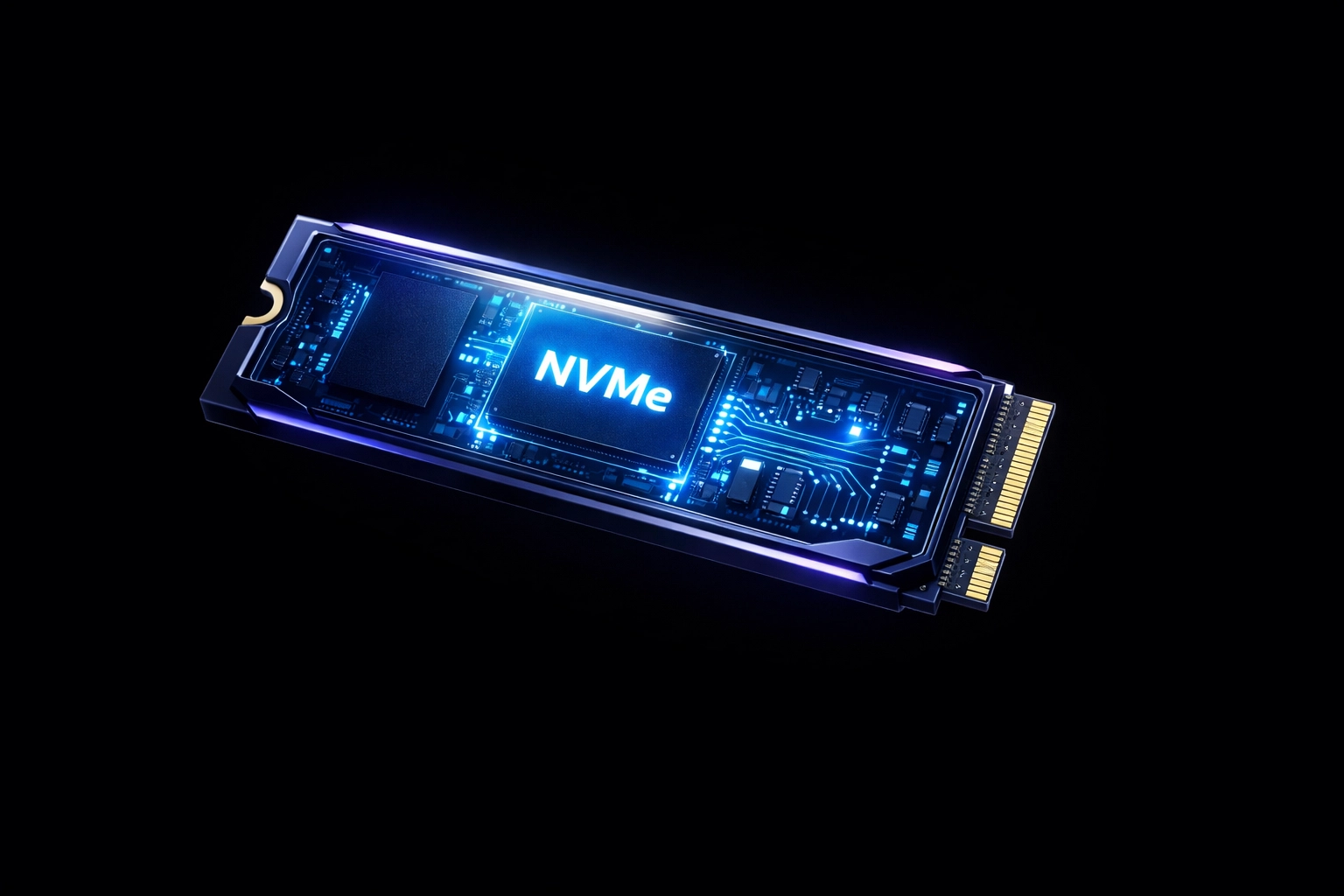
Modern, high-performance hosting uses SSD (Solid State Drives) or, even better, NVMe storage.
NVMe is significantly faster than standard SSDs. It allows your server to find and serve files almost instantly.
When a user lands on your site, their browser asks your server for files. CSS, JavaScript, images, and text.
On a slow host, this request sits in a queue. On a high-performance host, it’s handled immediately.
We recommend looking for hosts that support the HTTP/3 protocol. This is the latest standard for data transfer. It reduces latency by up to 7% compared to older versions.
It might not sound like much. But in the world of SEO, 7% is the difference between ranking #3 and ranking #1.
Why Your Server Location Impacts Local SEO
Geography still matters in a digital world.
Physical distance creates latency. If your business is in Chicago but your server is in London, your data has to travel across an ocean.
That trip takes time.
Even a 70-millisecond delay from distance can impact your user experience. If you are a local business targeting local customers, your server should be near them.

This is where a Content Delivery Network (CDN) comes in.
A CDN stores copies of your website on servers all over the world. When a user visits your site, the CDN serves the files from the server closest to them.
High-performance hosting usually includes a built-in CDN. This ensures your site is fast for everyone, whether they are across the street or across the country.
Better speed leads to better local SEO. It helps you show up in the "Map Pack" when people search for services "near me."
Uptime: The Silent SEO Killer
If your website is down, you don't exist.
Search engine bots crawl your site regularly. If they try to visit and your server is down, they move on.
If it happens frequently, Google will stop crawling you as often. Your rankings will tank.
Most budget hosts promise 99% uptime. That sounds good, right?
Not really. 99% uptime means your site could be down for over three days a year.
High-performance hosting aims for 99.9% or 99.99%. That is the standard you need.
Reliability builds trust. Trust with your customers. Trust with search engines.
Scalability Without the Headache
Success can be a double-edged sword.
If your latest marketing campaign goes viral, your traffic will spike.
Can your hosting handle it?
Shared hosting often crashes during traffic surges. Your site goes offline right when you need it most.
High-performance solutions: like VPS or Cloud hosting: offer automatic scaling. They provide more resources the moment you need them.
You get the capacity you need without having to hire a full-time IT person to manage the server. It’s about growing your business without the hiring headache.

This is the same philosophy we use at Sndflo for our AI receptionists. We help you scale your customer service without adding more seats in the office.
Your hosting should work the same way. It should be invisible, reliable, and powerful.
The Connection Between Hosting and AI Tools
Modern websites are becoming more interactive.
You aren't just showing text anymore. You are using SMS chatbots. You are deploying 24/7 voice agents.
These AI tools require a stable, fast connection to work correctly.
If your website is lagging, your AI receptionist might struggle to load. Your chatbot might feel clunky.
A slow site ruins the "magic" of AI. It makes your business look outdated.
High-performance hosting ensures all your digital tools: from your SEO plugins to your AI agents: run at peak efficiency.
How to Choose the Right Host
Don't buy based on price alone.
A $5/month hosting plan is a recipe for SEO failure. You will spend more on lost leads than you save on hosting fees.
Look for these features:
- NVMe Storage: For lightning-fast data access.
- Server-Level Caching: This saves the server from having to rebuild your pages every time someone visits.
- Daily Backups: Because things happen.
- Staging Environments: To test changes before they go live.
- Dedicated Resources: Ensure other sites on the same server don't steal your speed.
Final Thoughts
Your website is your 24/7 digital storefront.
You wouldn't build a high-end retail shop on a foundation of sand. Don't build your digital presence on cheap hosting.
Speed is the silent partner of SEO. It makes everything else you do: content, keywords, backlinks: more effective.
Stop losing customers to a loading bar.
Invest in high-performance infrastructure. Your rankings, and your customers, will thank you.
Ready to scale your business with the power of AI? Let's talk. We help SMBs dominate their local markets with smart tech and faster results.
The future is fast. Don't get left behind.
Leave a Reply