
It's 2:47 PM on a Tuesday.
You're elbow-deep in a client meeting. Your phone buzzes. Then buzzes again. By the time you check your missed calls an hour later, there are three new numbers you don't recognize.
You call back. Voicemail. Voicemail. The third one picks up but says they "already found someone else."
That last one? That was a $3,200 job. Gone.
This happens more often than you think. And the math is brutal.
The Real Cost of a Missed Call (It's Not What You Think)
Here's what most business owners don't realize: every missed call has a price tag attached to it.
Research from call center analytics shows the average cost per missed call sits at $12.15. That might not sound like much. But here's where it gets interesting.
If you're a small to medium-sized business missing just six calls per day, you're hemorrhaging over $26,000 annually.
Six calls per day. That's it.
But let's be honest. If you're running an HVAC company, a law firm, or a medical practice, your numbers look different. Much different.
Take HVAC businesses. The average service call runs around $650. Miss 25 calls per week, and you're staring down $546,000 in lost annual revenue. That assumes 70% of callers won't bother calling back. Spoiler: they won't.
Real estate agents? Missing eight calls weekly with an average commission of $12,000 translates to $26,880 in lost potential revenue every single month. Even at conservative conversion rates.
Healthcare providers typically miss 15 to 30 calls weekly. That's $6,300 to $42,000 monthly depending on appointment values.
The pattern is clear. The more valuable your service, the more expensive your silence.
Why People Don't Call Back
You might be thinking: "They'll call back if they really need me."
They won't.
Here's what happens in your potential customer's mind when your phone goes to voicemail:
First, doubt creeps in. Are you even in business? Are you too busy to take on new work?
Second, frustration. They're calling during business hours. Why aren't you answering?
Third, they move on. They scroll to the next Google result. They call your competitor. Done.
70% of callers won't retry after getting voicemail. They're not being difficult. They're being practical. They have a problem that needs solving today, not whenever you get around to checking messages.
Your voicemail greeting promising to "call back as soon as possible" doesn't matter. By the time you return the call, they've already booked with someone who picked up.
The Hidden Costs You're Not Tracking
Lost revenue is just the beginning. Missed calls create a ripple effect that damages your business in ways that don't show up on a spreadsheet.
Your reputation takes a hit. Online reviews mention that you're "hard to reach" or "never available." Those reviews stick around long after you've implemented new systems.
Your marketing spend becomes less effective. You're paying for Google Ads, Facebook campaigns, maybe even direct mail. All of it drives people to call you. If you're not answering, you're burning money.
Your staff gets overwhelmed. When you do answer, you're rushing through calls because three more are waiting. Quality drops. Customer experience suffers.
Your growth stalls. You can't scale if you can't handle the leads you already have. You stay stuck in the cycle of being too busy to grow but not growing enough to afford help.
Enter the AI Receptionist
This is where technology finally catches up to the problem.
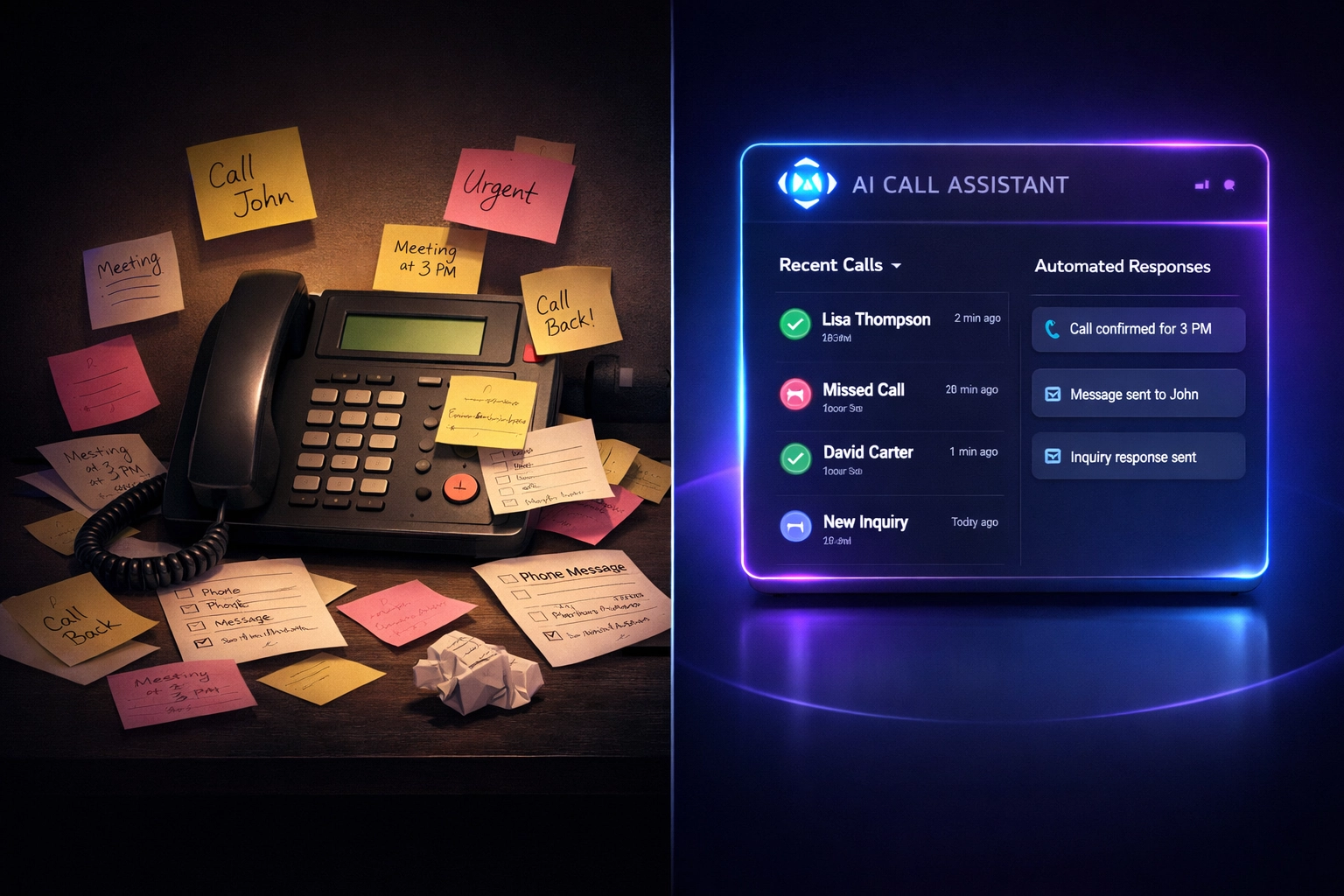
An AI receptionist isn't just fancy voicemail. It's not an answering service where someone takes a message and emails it to you.
It's a system that actually handles the call. Books the appointment. Answers basic questions. Qualifies the lead. Takes payment information if needed.
It does this 24/7. Never takes a lunch break. Never calls in sick. Never gets frustrated with a difficult caller.

The technology behind AI voice agents has evolved past the robotic phone trees everyone hates. Modern systems use natural language processing. They understand context. They handle interruptions. They sound conversational.
More importantly, they convert.
How It Actually Works
Here's what happens when someone calls a business using an AI voice agent:
The phone rings. The AI answers within two rings. No hold music. No "press 1 for sales" maze.
The caller explains what they need. The AI understands. It checks your calendar in real-time. It offers available time slots. The caller picks one. Done.
The appointment gets added to your schedule automatically. A confirmation text goes out immediately. A reminder follows 24 hours before the appointment.
If the AI doesn't know something, it doesn't fake it. It collects the information and escalates to you via text or email. You can choose to take over the call or let the AI handle the rest.
The entire interaction feels natural. Most callers don't realize they're not talking to a human. And frankly, they don't care as long as their problem gets solved.
The Missed Call Text Back Game-Changer
Here's another piece of the puzzle that most businesses overlook: missed call text back.
Even with an AI answering system, some calls will drop. Someone might hang up by accident. The connection might fail. Life happens.
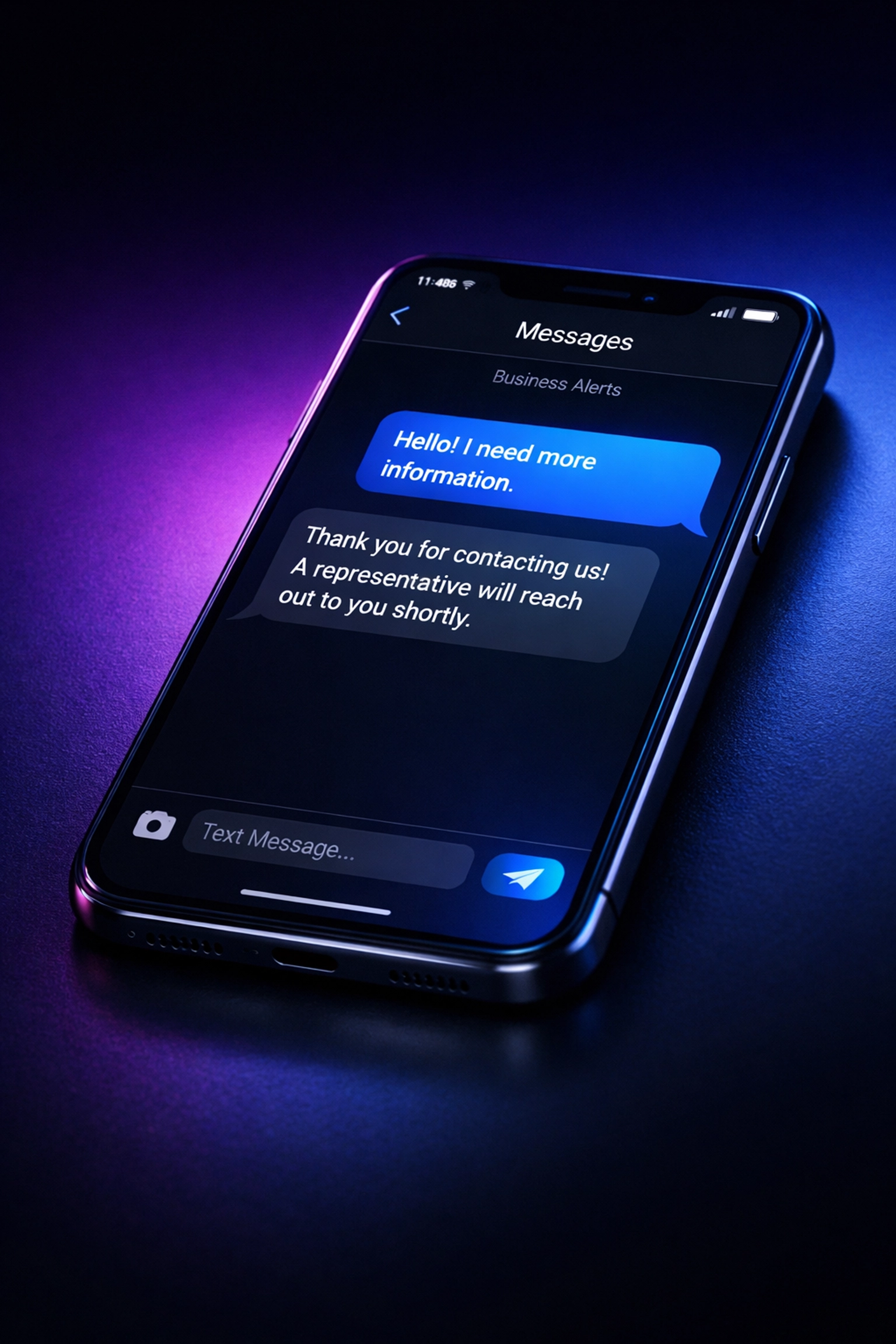
A missed call text back system immediately sends an SMS to any number that called but didn't complete the conversation. Something simple like:
"Hi, looks like we missed your call. What can we help you with? Reply here or call back anytime."
This single feature recovers leads that would otherwise vanish into the void. People respond to texts. They're less intrusive than calling. They allow the customer to communicate on their terms.
The response rate on these texts typically exceeds 40%. That means four out of every ten missed calls get recovered without you lifting a finger.
What This Means for Your Business
Let's run the numbers with a real scenario.
You're running a home services business. You're currently missing 20 calls per week. Your average job is worth $800. Your close rate on leads is 30%.
Current state: You're losing approximately 14 jobs monthly (20 calls × 70% who don't call back × 4 weeks × 30% close rate). That's $11,200 in monthly revenue just evaporating.
With an AI receptionist: You capture all 20 calls. You convert at the same 30% rate. That's 24 new jobs monthly. $19,200 in new revenue.
The difference? $96,000 annually.
That's with conservative numbers. If your average job value is higher, or if your close rate improves because customers appreciate the instant response, the impact multiplies.
The Bigger Picture
This isn't really about technology. It's about respect.
Respect for your customers' time. Respect for your own business. Respect for the effort you put into marketing and brand-building.
Every missed call represents someone who chose you. They saw your website, read your reviews, maybe got a referral from a friend. They picked up the phone and dialed.
That action required trust. They trusted you'd be there. They trusted you'd help them.
When you don't answer, you break that trust. Not dramatically. Not loudly. But definitively.
An AI voice agent ensures that trust never gets broken. It's there when you can't be. It handles the routine so you can focus on what actually requires your expertise.
What Happens Next
You have two options from here.
Option one: keep doing what you're doing. Accept that missed calls are just "part of running a business." Watch competitors who implement better systems slowly eat into your market share.
Option two: acknowledge that communication technology has evolved. Customer expectations have changed. The businesses winning right now are the ones who answer the phone. Every time. Even at 10 PM on a Saturday.
The cost of implementing an AI receptionist is a fraction of what you're losing to missed calls. The setup takes days, not months. The learning curve is minimal.
Your customers won't notice the difference. They'll just notice you're suddenly easier to reach. More responsive. More professional.
That's what matters.
The $126,000 question isn't whether you can afford to implement this technology. It's whether you can afford not to.
Your phone is ringing right now. Someone needs what you offer. Are you going to answer?
Leave a Reply